Being prepared means having reliable, shelf-stable meals when access to fresh food isn’t available. This guide highlights five highly rated survival food products designed for emergencies, camping, and long-term storage. Each option offers durable packaging, long shelf life, and simple preparation—just add water in many cases. Use the quick-reference table below to compare core details at a glance.
| Product | Brand | Servings | Shelf Life | Notes |
|---|---|---|---|---|
| ReadyWise Emergency Food Supply – 120 Servings Favorites Sample Bucket | ReadyWise | 120 | Up to 25 years | Grab & Go bucket, easy access tray, no refrigeration |
| Augason Farms Lunch & Dinner Variety Kit Emergency Food Supply | Augason Farms | 113 | Up to 25 years | 13 meal varieties, 22,940 calories, just add water |
| Ready Hour 120 Serving Entree Bucket | Ready Hour | 120 | Up to 25 years | Freeze-dried meals, durable container, no refrigeration |
| ReadyWise Emergency Food Supply – 72 Hour Survival Kit | ReadyWise | 30 servings | Up to 25 years | Portable, just add water, long-term reliability |
| Mountain House 3-Day Emergency Food Supply | Mountain House | 18 servings | Not specified here | Includes varied meals, quick prep |
ReadyWise Emergency Food Supply – 120 Servings Favorites Sample Bucket

ReadyWise offers a Grab & Go bucket with 120 servings of entrées designed for long-term storage. The bucket is labeled for up to 25 years of shelf life and features a split-lid design that doubles as a convenient tray for serving. Meals are prepared by adding water, making it suitable for outages, camping, and travel. The packaging emphasizes portability and stackability, enabling easy pantry or car storage while preserving flavor and nutrition over time.
- Ultimate survival essential with 120 servings
- Long shelf life of up to 25 years
- Stackable, portable bucket with a split lid for quick access
Augason Farms Lunch & Dinner Variety Kit Emergency Food Supply
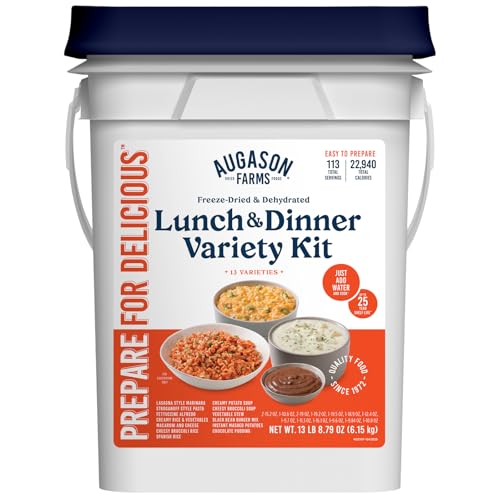
This kit bundles 113 servings across 13 meal varieties with a 25-year shelf life, stored in a four-gallon bucket. It’s designed for long-term storage in home pantries, campers, or emergency kits. Meals require just add water and heat, making it suitable for quick lunches or dinners when cooking facilities are limited. The variety helps address different taste preferences and dietary needs during extended emergencies or daily meal planning.
- Multiple meal varieties for flexibility
- Approximately 22,940 total calories
- Just add water and heat; no advanced cooking required
Ready Hour 120 Serving Entree Bucket

Ready Hour emphasizes taste alongside preparedness. The freeze-dried entrees come in a durable, flood-safe container with a handle for transport. All meals are designed to last up to 25 years and require no refrigeration, making them practical for home storage, car kits, or disaster planning. The packaging aims to deliver reliable nutrition during emergencies without sacrificing flavor.
- Tastes great while serving emergencies or daily use
- Durable, portable container with easy transport
- Up to 25-year shelf life, no refrigeration needed
ReadyWise Emergency Food Supply – 72 Hour Survival Kit

This compact kit provides 30 servings of protein-rich freeze-dried meals intended for quick, three-day emergency use. It is designed for easy storage in home spaces, cars, or go-bags, with a focus on portability and readiness. The kit’s long shelf life up to 25 years offers a reliable option for short-term disaster events and ongoing preparedness strategies. The emphasis is on straightforward, no-fuss meal preparation in stressful situations.
- Ready-to-go meals for 72 hours
- Portable storage and simple preparation
- Long shelf life up to 25 years
Mountain House 3-Day Emergency Food Supply

Mountain House provides 18 servings designed to deliver about 1,706 calories per day over 72 hours. The meals are quick to prepare, typically requiring only hot water, and come with a selection that includes biscuits and gravy, granola with milk and blueberries, and various entrées. This kit emphasizes rapid preparation and reliable flavor, making it a popular option for campers and emergency planners who value familiar, convenient meals during outages or outdoor trips.
- Emergency calories for 3 days
- No artificial flavors or colors (as labeled)
- Quick prep with hot water; room temperature water works with longer hydration
Buying Guide: Key Considerations For Survival Food Purchases
Selecting survival food and supplies involves balancing storage needs, preparation simplicity, nutritional content, and cost. Consider the following perspectives to make an informed choice:
- Shelf life and storage conditions: Look for products with long shelf life (10–25 years common in these options) and storage requirements that fit your space. Consider moisture control and whether the packaging is stackable or weather-resistant.
- Servings and caloric needs: Estimate daily caloric needs for you or your family during an emergency. Kits with higher calories per serving can reduce the total number of containers you need to store.
- Preparation requirements: Most listed options require only water and limited heat. Assess whether you have reliable access to water and a stove, or if ready-to-eat formats are preferable for quick meals.
- Variety and nutrition: A diverse meal assortment helps prevent flavor fatigue and supports balanced nutrition. Some kits provide a mix of breakfasts, lunches, and dinners across multiple varieties.
- Portability and accessibility: Buckets with split lids or lightweight pouches enable easy access and transport. Think about how you will access food in a vehicle, shelter, or backpack.
- Budget and total storage footprint: Longer shelf life and larger serving counts increase upfront costs but reduce long-term shopping frequency. Measure storage footprint against available space.
- Open dating and quality signals: Note that some products include inspection or packaging dates rather than explicit expiration dates. Treat older-looking packaging as a signal to rotate stock if necessary.
- Meal variety vs. simplicity: Some shoppers prefer a wide variety of meals; others prioritize ultra-simple, just-add-water options. Align with your household preferences and cooking capabilities.