For overlanders, dependable solar power means uninterrupted charging for lights, medical devices, fans, cameras, and communication gear. The following top solar panels are selected for rugged terrain, quick setup, and solid efficiency—ensuring you stay powered while trekking remote trails. Each option emphasizes portability, durability, and high conversion rates, helping you choose a panel that fits your vehicle, storage space, and daily energy needs.
| Product | Brand | Key Strength |
|---|---|---|
| Jackery SolarSaga 100X Portable Solar Panel | Jackery | High efficiency with PERC cells; splash-proof ETFE casing |
| Renogy 200W Portable Solar Panel | Renogy | 25% efficiency; lightweight with magnetic closure |
| Renogy 400W Portable Solar Panel Blanket | Renogy | Ultra-lightweight, 16-fold design; versatile mounting |
| Renogy 400W Portable Solar Panel Suitcase | Renogy | Rapid setup; rugged build with IP68 connectors |
| EF ECOFLOW 220W Portable Solar Panel | EF ECOFLOW | 25% efficiency; adjustable angle; durable ETFE coating |
Remember, actual performance depends on sunlight, angle, and weather. The products below are organized to help you compare setups—from compact, foldable panels to larger, all-day charging solutions—so you can plan for weekend trips or extended expeditions off the grid.
Jackery SolarSaga 100X Portable Solar Panel
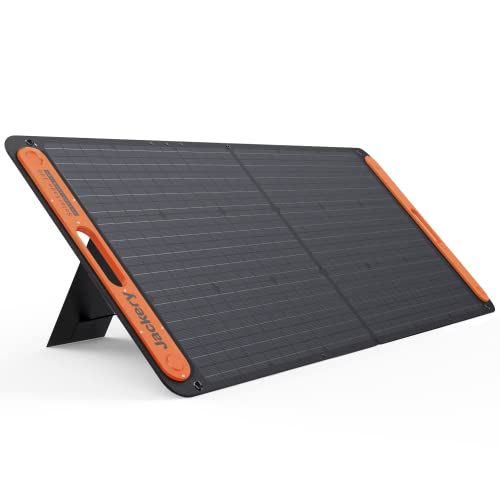
The Jackery SolarSaga 100X is a compact, foldable panel designed for quick off-grid setup. It features two kickstands for stable placement on various terrains and a TPE rubber handle for easy transport. Its monocrystalline cells use PERC technology, delivering higher conversion efficiency—up to around 23%—which helps maximize energy generation in limited sun. The ETFE-laminated case adds durability, and IP65 splash resistance protects the panel during light splashes. This panel is ideal for topping up a Jackery power station or other compatible models while camping, hiking, or roadside adventures.
Key considerations:
– Pros: Fast setup with dual kickstands; strong efficiency; durable weather-resistant construction.
– Cons: Performance may vary in heavy rain or shade; check compatibility with your power station model.
Renogy 200W Portable Solar Panel

Renogy’s 200W portable setup emphasizes efficiency and portability. It uses upgraded 16BB N-Type cells that push efficiency around 25%, delivering more power per sunlight moment—crucial for tight camps or variable conditions. The unit weighs about 13.89 pounds, making it one of the lighter options in its class. A magnetic closure design simplifies packing, while the fold-and-go frame is tailored for tight spaces like SUVs or small vans. It includes multiple output ports including USB-C PD and USB-A, enabling charging of phones, tablets, and smaller devices, with MC4 outputs to connect to power stations or battery systems.
Key considerations:
– Pros: High efficiency in a compact, light package; versatile outputs; easy storage.
– Cons: May require a sturdy surface and clear sky for best results; heavier panels may strain small racks on some vehicles.
Renogy 400W Portable Solar Panel Blanket
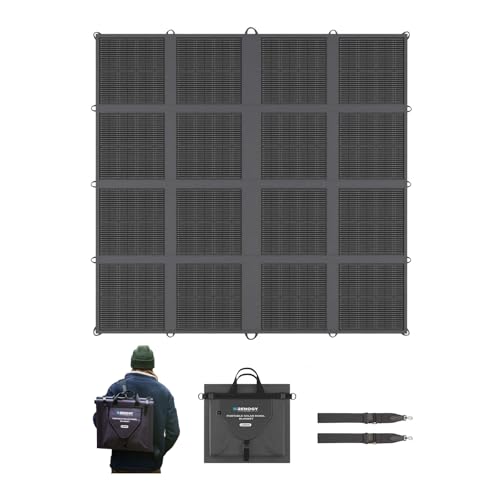
The Renogy 400W Solar Panel Blanket is a highly portable, ultra-thin option designed for maximum space efficiency. Its 16-fold design reduces bulk and weight, making it suitable for SUVs, truck campers, or tight storage under a canopy. The panel supports flexible installation methods—lay flat for sun exposure, drape over a vehicle, or suspend in a shaded area to catch lower-angle light—while maintaining a full 400W output. With 25% efficiency from its N-Type cells and robust ETFE coating, it offers resilience against UV exposure and weather. A compact footprint and a decent weight make it a practical choice for longer trips where space matters.
Key considerations:
– Pros: Excellent space savings; multi-method mounting; strong efficiency.
– Cons: Folding mechanism requires careful handling to extend lifespan; may be more delicate than rigid panels if not treated gently.
Renogy 400W Portable Solar Panel Suitcase

Renogy’s 400W Portable Solar Panel Suitcase offers rugged durability and fast deployment. Weighing about 30.2 pounds, it folds to a compact size with a built-in carry case, making it practical for RVs, vans, and overland rigs. The construction features reinforced fiberglass and ETFE coating to withstand harsh outdoor conditions while preserving efficiency at around 23%. The setup process is quick, with sturdy kickstands and IP68-rated waterproof connectors that ensure reliable operation in damp or splash-prone areas. It effortlessly connects to most portable power stations and is well-suited for extended trips where high wattage is needed.
Key considerations:
– Pros: Durable, quick setup; high wattage for bigger systems; reliable waterproof connectors.
– Cons: Higher weight; larger footprint may require more storage space.
EF ECOFLOW 220W Portable Solar Panel

The EF ECOFLOW 220W panel uses a next-generation N-Type cell design to achieve about 25% efficiency, providing faster charging in a smaller footprint. Its 30-60 degree adjustable angle bracket helps optimize sun exposure across the day, which is especially beneficial when steering through varied landscapes. The ETFE coating adds long-term durability against UV and weather exposure. A compact, portable form makes it a strong choice for smaller rigs or quick setup scenarios where reliable daytime energy is essential for charging EcoFlow or similar power stations.
Key considerations:
– Pros: High efficiency; adjustable positioning for peak sun; robust construction.
– Cons: Slightly smaller wattage than some 400W options; depends on sun availability for best results.
Renogy 200 Watt Solar Panel Blanket (N-Type)

The Renogy 200W Solar Panel Blanket is a lightweight, eight-fold design that emphasizes portability and space efficiency. With 25% efficiency from N-Type cells, it maintains high solar conversion even when space is at a premium. The eight compact panels fold into a highly portable rectangle, ideal for weekend trips where easy storage and rapid deployment matter. It supports multiple mounting options and includes QC3.0 USB-A and Type-C outputs to charge a range of devices directly. The blanket’s engineering caters to campers, RVs, and off-road vehicles that require reliable, versatile solar input.
Key considerations:
– Pros: Extremely portable; strong efficiency; versatile outputs.
– Cons: May require more complex wiring for some power stations; weight distribution should be managed on smaller vehicles.
Buying Guide: Key Purchase Considerations
- Power needs and space: Assess daily energy consumption and available storage. If you use a high-capacity power station, larger panels like 400W models can reduce charging time; for tight spaces, compact 200W or 220W options may be better.
- Portability vs. durability: Lightweight, foldable panels are easy to store but may require gentler handling. Rigid or suitcase designs offer rugged durability and faster setup, often with weatherproof connectors for harsh environments.
- Cell technology and efficiency: N-Type cells generally offer higher efficiency and better performance in shaded or cooler conditions. Look for panels rated around 25% efficiency for strong daylight performance.
- Weather resistance and durability: ETFE coatings, IP ratings (IP65, IP68), and robust framing help panels withstand mud, dust, rain, and barbed brush on overlanding trips.
- Versatility and outputs: Multiple USB ports and MC4 or solar connector compatibility expand charging options for phones, tablets, cameras, and power stations. Consider how the panel will connect to your specific power setup.
- Setup speed and mounting: Dual kickstands, magnetic closures, and adjustable angle brackets can save setup time and optimize sun exposure across different campsites and vehicle orientations.
- Warranty and support: Durable components with favorable warranties reduce long-term risk, especially if you venture into remote areas where repair options are limited.