Finding the right solar panel for a backpack depends on how you balance weight, wattage, and durability. The following selections focus on compact, foldable panels designed for hikers, campers, and travelers who need reliable power on the go. Each option emphasizes portability, multiple charging ports, and weather resistance to support smartphones, tablets, power banks, and small portable power stations during outdoor activities.
The table below highlights five top picks chosen for backpack-ready solar charging. The list emphasizes lightweight designs, foldability, and smart charging features that automatically optimize performance in the field.
| Product | Brand | Key Feature | Port Types |
|---|---|---|---|
| FlexSolar 60W Portable Solar Panels | FlexSolar | High-wlexibility PD3.0 USB-C, fast DC output, IP65 durability | PD3.0 USB-C, QC3.0 USB-A, DC |
| FlexSolar 40W Foldable Solar Panel | FlexSolar | Balanced power and ultra-lightweight design | USB-C PD, USB-A QC3.0, DC |
| SOLUPUP 30W Foldable Panel | SOLUPUP | Low weight with high efficiency, dual USB outputs | USB-A, USB-C |
| LUMOPAL 60W Foldable Panel | Lumopal | High efficiency, strong output, backpack-friendly fold | PD USB-C, USB-A QC3.0, DC |
| ECEEN Solar Backpack Charger (7W) | ECEEN | Integrated solar charging in a backpack design | USB-A |
FlexSolar 60W Portable Solar Panels

The FlexSolar 60W panel integrates multiple high-speed charging ports to support a range of devices. It features QC3.0 USB-A (18W max), PD3.0 USB-C (40W max), and a DC output (60W max at 20V-28V). This configuration enables direct charging of small-to-medium solar generators, power banks, tablets, and phones without a separate battery. The built-in intelligent chip identifies connected devices and optimizes output for speed and safety. An LED indicator shows charging activity. Note: A solar controller may be required for charging lead-acid batteries, and the junction box is not waterproof, so care is needed in wet environments. Its surface uses a strong, transparent E film with A+ monocrystalline cells and an IP65-rated exterior for durability in unpredictable weather, with an estimated lifespan of 5–10 years under normal use.
Best suited for weekend camping, emergency kits, and situations where rapid top-ups are needed for a small power station or devices with higher power demands. Its robust port set is a standout for users seeking a single panel that can power multiple devices directly from sunlight.
15W Small Portable Solar Panel (WASTDE)

The 15W foldable panel from WASTDE prioritizes lightness and compactness, weighing under a pound and folding into a palm-sized form. It uses monocrystalline cells with an efficiency profile in the 20–30% range and provides a maximum of 5V/3.0A via USB-C/USB-A for on-the-go charging. The built-in storage bag helps protect cables and keeps ports dry, making it a practical option for hikers who want to keep a lightweight backup power source in a backpack pocket. Its portability is ideal for charging small devices like smartphones, action cameras, and USB-powered accessories during day hikes or short trips.
Pros include easy deployment, straightforward charging for mobile devices, and a bag that helps weather protection and organization. A good fit for travelers who want minimal weight and simple operation without larger power needs.
FlexSolar 40W Foldable Solar Panel

This panel delivers a solid 40W of charging power through both USB-C PD and USB-A ports, plus a dedicated 19V DC port to power small power stations directly. Smart load distribution prioritizes single-port use to maximize efficiency, while an integrated IC chip provides device-aware charging and a status LED for quick checks. At roughly the size of a slim notebook and lightweight, it fits easily into a backpack for day trips or multi-day hikes. It’s a balanced option for campers who want reliable sun-powered charging without heavy gear.
Consider this panel if you regularly run multiple small devices and need a compact, efficient solution that can share energy across ports during steady sunlight.
ECEEN Solar Backpack 7W
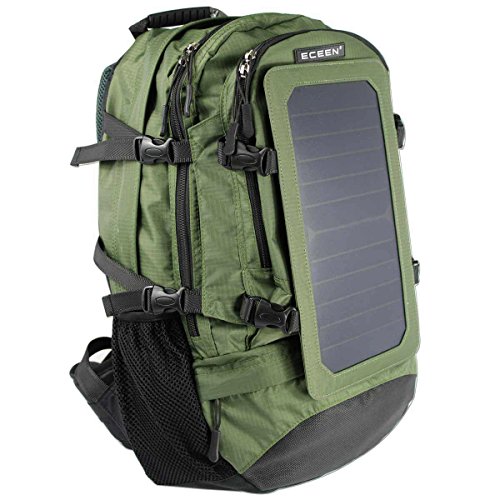
The ECEEN 7W solar charger is built into a backpack, offering high-efficiency solar cells with approximately 22% transfer efficiency. It includes a 5V USB port for direct charging and is designed for outdoor enthusiasts who want a ready-to-use, hands-free power source integrated into their gear. The charger blends into backpack aesthetics while enabling on-demand charging for GPS devices, headlamps, or phones during trekking, hiking, or biking. It emphasizes weather resistance and durability through weather-resistant materials and protective coatings, making it a practical choice for lightweight, all-day excursions.
The combination of these five options provides a spectrum from ultra-lightweight, day-hike oriented panels to more capable packs that can top up devices during longer trips. The following buying guide highlights critical decision points to help readers pick the best panel for their specific needs.
Buying Guide: Key Purchase Considerations
Power output and device needs: Determine the total wattage you typically require in a day. For smartphones and small accessories, panels in the 15–40W range are usually sufficient for occasional top-offs. If you rely on a small power bank or a compact power station, consider 40–60W panels to reduce charging time and improve reliability in variable sunlight.
Port configuration and compatibility: Look for panels with USB-C PD plus USB-A/QC ports to maximize compatibility with a wide range of devices. DC outputs can be helpful for directly powering certain power stations, but ensure you have appropriate cables and adapters on hand.
Weight, size, and portability: Backpackers prioritizing lightweight gear should favor folds under 2–4 pounds and compact folded dimensions. A panel weighing around 1–4 pounds with a small folded footprint tends to integrate better with carry-on or hiking packs.
Durability and weather resistance: IP ratings and protective materials matter for outdoor use. Panels designed with rugged exteriors, weather-proof fabrics, and robust hinges or joints tend to withstand field use better. Note any caveats, such as junction box waterproofing, and plan accordingly.
Efficiency and environmental conditions: Monocrystalline cells typically offer higher efficiency than polycrystalline options, translating to better performance under the same sun. Real-world output varies with angle, cloud cover, and temperature, so consider panels with smart charging features that optimize for these conditions.
Setup and mounting: Some panels fold and clip to a backpack or tent, while others require a flat surface. Panels with carabiner attachments or flexible mounting options can simplify field setup and maintain ideal sun exposure.
Safety and protection features: Overcurrent, overtemperature, and short-circuit protections help protect devices. LED indicators provide a quick status readout, which is helpful when you’re in rugged environments.
Compatibility with existing gear: If you already own a portable power station or battery pack, verify input/output compatibility to avoid redundant gear. Some panels are marketed as “waterproof,” but junction boxes may still require care in heavy rain or immersion.
Price-to-performance balance: While lighter, smaller panels may suffice for casual use, higher-wattage panels with multiple outputs can justify the cost for serious outdoors enthusiasts or emergency prep kits. Consider how often you’ll use the panel and in what contexts to determine value.