When camping off the grid or traveling on a highway adventure, a reliable RV rooftop air conditioner with a heat pump can keep your motorhome, travel trailer, or camper comfortable year-round. This guide reviews top models, comparing cooling and heating performance, energy use, noise levels, and installation considerations. We focus on units that are non-ducted or easy to install, with Wi‑Fi or smart controls where available. Read on to find a model that fits your RV size, climate, and electrical setup.
Summary of chosen products
| Brand | Name | |||
|---|---|---|---|---|
| ACiQ | ACiQ 15,000 BTU RV Air Conditioner with Heat Pump | 15,000 | 12,000 | Eco-friendly R32 refrigerant; 115V operation; non-ducted |
| TOSOT | Go Cool 16,000 BTU RV AC with Heat Pump | 16,000 | 12,500 | Smart WiFi via Gree+ app; non-ducted |
| FOGATTI | 16K BTU RV AC with Heat Pump and WiFi | 16,000 | 12,500 | Quiet operation; dual-motor system |
| FOGATTI | InstaCool Ultra 16K BTU RV AC | 16,000 | 12,500 | Easy installation; high efficiency |
| TURBRO | Inverter 13.5K BTU RV AC with Heat Pump | 13,500 | heating up to 4x output | Slim, energy-saving inverter compressor |
Note: Each unit is designed for non-ducted RV roof installs or simple rooftop mounting. Consider your RV length, ceiling height, and electrical capacity (shore power, generator, or inverter) when choosing BTU coverage and amperage draw.
id=”rv-top-roof-ACs-with-heat-pump” style=”display:none;”>RV Rooftop ACs With Heat Pump
Choosing the right rooftop air conditioner with a heat pump involves balancing cooling power, heating capability, energy efficiency, noise, and installation practicality. The models listed below offer a mix of features suitable for different RV sizes and usage patterns—from extended trips in heat to cool nights and shoulder-season cold snaps. Each product section includes a succinct overview focused on core specs and advantages.
ACiQ 15,000 BTU RV Air Conditioner With Heat Pump

The ACiQ unit provides a robust blend of cooling and heating with 15,000 BTU cooling and 12,000 BTU heating, suitable for RVs up to roughly 600 sq ft in climate-control scenarios. It operates on standard 115V power and uses eco-friendly R32 refrigerant. The rotary compressor supports reliable performance, making it a practical choice for shore power or generator setups. Its non-ducted design helps simplify installation on many RV roof configurations.
TOSOT 16000 BTU GO Cool RV AC With Heat Pump

With 16,000 BTU cooling and 12,500 BTU heating, this model targets RVs up to 600 sq ft and supports flexible control via WiFi using the Gree+ app. It’s designed for year-round use, performing efficiently across a broad outdoor temperature range. The non-ducted unit is suitable for campers and trailers seeking smartphone management and a straightforward rooftop install.
FOGATTI RV AC Unit 16K BTU With Heat Pump

FOGATTI’s 16K BTU unit combines cooling and heating with a high-efficiency profile and a low-noise operation. The dual-sync motor and triple-fan arrangement deliver around 418 CFM airflow, enabling rapid temperature changes. Aimed at RVs up to 36 feet, the unit emphasizes ease of installation and energy efficiency, with an EER rating around 11.8. It requires a compatible 15 or 20-amp circuit and is suitable for confident DIY rooftop installs.
FOGATTI InstaCool Ultra 16K BTU RV AC

This unit emphasizes speed and efficiency, delivering 16,000 BTU cooling with 12,500 BTU heating and a similar 418 CFM airflow as the earlier Fogatti model. The 11.8 EER rating reflects a careful balance of power and power draw. Its non-ducted design fits standard RV rooftop cut-outs and includes necessary sealing materials for a straightforward install. It’s well-suited to mid-size RVs seeking quick climate control with minimal power waste.
TOSOT 16000 BTU GO Cool RV AC With Heat Pump (Black)

This black-outlook variant retains the same 16,000 BTU cooling and 12,500 BTU heating profile, geared toward RVs up to 16–24 feet. It supports WiFi access via the Gree+ app and aims for a seamless indoor climate regardless of exterior conditions. It’s ideal for owners wanting modern control without sacrificing performance or installation simplicity.
RecPro RV Air Conditioner 15K Ducted or Non-Ducted

RecPro’s 15K unit is designed for either ducted or non-ducted RV roof configurations and emphasizes low amperage draw for off-grid use. It features a durable, UV-resistant enclosure and quiet operation at around 55 dB. The all-in-one design supports straightforward installation and is compatible with various RV layouts, making it a flexible option for travelers using solar or generator power without sacrificing comfort.
RecPro RV Air Conditioner 15K Silent, Heat Pump & Cooling
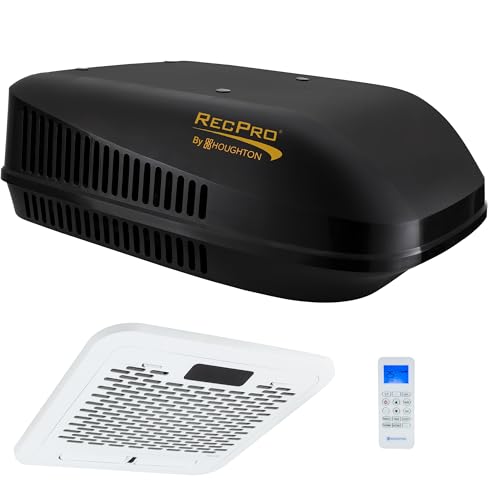
This RecPro model emphasizes energy efficiency with a low amp draw, making it suitable for off-grid setups and generators. It uses a rugged, UV-resistant external housing and maintains quiet operation around 55 dB. The unit’s all-in-one design supports easy installation on a wide range of RVs, balancing durability with comfortable climate control.
TURBRO Inverter 13.5K BTU RV AC With Heat Pump

The TURBRO unit uses an energy-saving inverter compressor to deliver up to 13,500 BTU cooling with heating support. The inverter design reduces energy use while maintaining stable operation and quieter performance. Its slim 10-inch rooftop profile helps reduce drag and fit on a broader range of RV rooftop layouts. The unit supports smart features and a remote control for convenient adjustments.
Buying Guide: Key Purchase Considerations
When selecting a rooftop AC with a heat pump for your RV, consider the following factors to ensure you get the best fit for your situation.
- Rooftop space and mounting: Measure the roof opening and confirm the unit’s required cut-out and mounting hardware. Non-ducted systems are often easier to install but verify compatibility with your RV’s roof thickness and insulation.
- BTU needs: Larger RVs may require 16,000 BTU or more for effective cooling, but heating requirements also matter in shoulder seasons. Match cooling and heating BTUs to your RV length and climate.
- Electrical requirements: Check shore power availability (115V vs. 230V in some setups), amperage draw, and whether your system can handle inverters or generators. Consider future solar expansion if off-grid.
- Energy efficiency: Look for high EER or SEER ratings, especially for off-grid use, to minimize power consumption during heating and cooling cycles.
- Noise levels: Quiet operation improves comfort during sleep and while staying indoors. Most RV units target under 50-55 dB, with some models going even lower.
- Smart controls: Wi‑Fi connectivity and mobile apps offer convenient remote management, scheduling, and diagnostics—handy for long trips or when monitoring from a distance.
- Durability and warranty: UV-resistant housings and corrosion-resistant materials extend rooftop life. Review warranty terms for outdoor exposure considerations and service availability.
- Installation complexity: Some units are designed for quicker, less invasive installs, while others may require additional sealing or roof reinforcement. Consider professional installation if uncertain.
In evaluating these options, prioritize models with robust heating performance for cold nights, strong cooling capacity for hot climates, and energy-efficient operation to support longer trips. The products highlighted here provide a range of BTUs, control features, and installation approaches to suit different RVs and itineraries.