Finding a dependable portable power source for camping and outdoor adventures ensures you stay connected, charge essential devices, and keep comfort intact during outages. This guide highlights five top options that balance capacity, weight, and versatile outputs. Each model supports typical camping gear—from laptops and cameras to small appliances—while offering multiple charging modes. Use the buying guide to compare features and choose the best fit for your trips.
| Product | Brand | Capacity (Wh) | Output Power (W) | Notable Features |
|---|---|---|---|---|
| Portable outdoor camping power supply, 1115Wh backup power supply | DMFJKJH | 1115 | 1200 | Multiple outputs including USB-C, USB-A, DC, AC; neon green/black design; strong shell |
| Jackery Portable Power Station Explorer 300 | Jackery | 293 | 300 | 2 Pure Sine Wave AC outlets; lightweight |
| GRECELL Portable Power Station 300W | GRECELL | 230 | 300 | LiFePO4 battery; 2 AC outlets; multiple ports |
| EnginStar Portable Power Station 300W | EnginStar | 296 | 300 | 2 110V Pure Sine Wave outlets; robust BMS |
| Flashfish 200W Portable Power Station | FF FLASHFISH | 151 | 200 | Multiple outputs; lightweight; LCD display |
Portable Outdoor Camping Power Supply (1115Wh)

The DMFJKJH power station features a high-capacity 1115Wh LFP automotive-grade lithium-ion battery and a robust 1000-1200W AC output. Its design emphasizes field readiness with a sturdy metal shell and a neon green/black aesthetic. Output versatility includes 2 USB-C ports, 2 USB-A ports, a DC car port, 2 pure sine wave AC outlets, and additional car refrigerator capability, plus integrated LED lighting. The unit is ideal for powering ice machines, laptops, cameras, drones, and small appliances during camping trips or emergency outages.
Jackery Explorer 300 Solar Generator
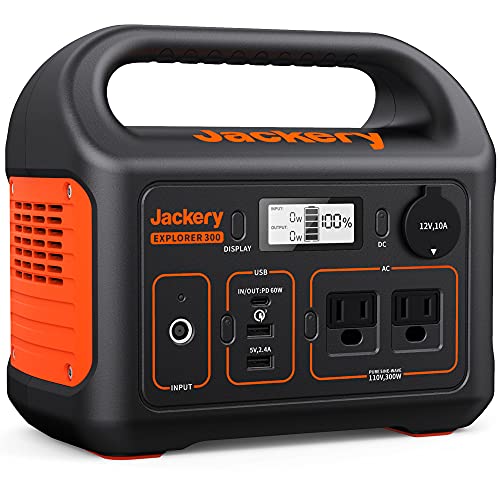
The Explorer 300 offers a compact 293Wh battery and two Pure Sine Wave AC outlets delivering up to 300W. It weighs about 7.1 pounds, making it highly portable for campers and hikers. Quick recharging is a highlight: 80% charge in around 2 hours via wall outlet with a 60W USB-C input, and alternate charging through car outlets or solar panels as part of the system. It supports multiple devices simultaneously, including drones, laptops, cameras, and more, providing reliable off-grid power for extended outdoor use.
GRECELL Portable Power Station 300W

The GRECELL power station centers on LiFePO4 chemistry for stability, offering up to 300W continuous output across two AC outlets. It supports multiple charging modes, including AC, car, and solar with input options that enable rapid top-offs. A four-mode charging approach allows flexible use in outdoor scenarios, while an upgraded Battery Management System protects against overloads and short circuits. It’s designed to power cameras, laptops, drones, and other devices during camping or RV trips.
EnginStar Portable Power Station 300W

EnginStar delivers 296Wh capacity with dual 110V pure sine wave outlets and multiple ports for simultaneous charging. The device is protected by an advanced Battery Management System to guard against short circuit, overcharge, and overheating. It’s designed for CPAP use, laptops, cameras, drones, and other essential devices, making it a solid choice for emergencies, camping, or travel with a focus on safety and reliability.
MARBERO Portable Power Station 88Wh
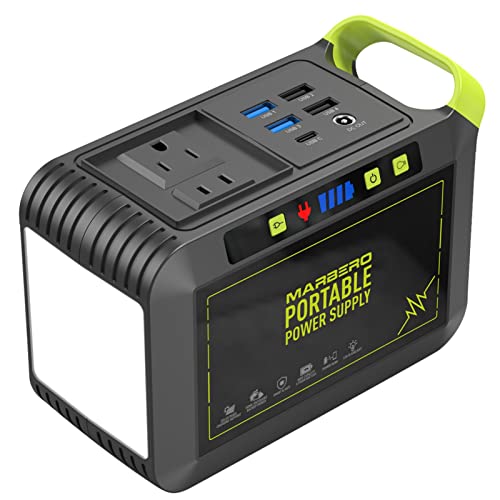
The MARBERO 88Wh unit emphasizes compactness with a slim profile and multiple outputs, including USB-C PD, USB-A, and DC ports, plus two AC outlets for small appliances. It’s designed for quick charging with included adapters and supports solar charging as an option. A rugged build with a built-in LED flashlight makes it suitable for short trips, backyards, and emergency use where lightweight power is needed.
Buying Guide
- Capacity and runtime: Choose a unit with enough watt-hours to meet your typical daily needs. Higher capacity means longer runtime but heavier weight; balance is key for backpacking vs. vehicle-based camping.
- Output options: Look for a mix of AC outlets, USB-C PD, USB-A, and DC ports. If you power laptops or small appliances, ensure at least one pure sine wave AC outlet and sufficient total wattage.
- Battery chemistry: LiFePO4 (LFP) offers longer life and better thermal stability, while lithium-ion variants tend to be lighter. For frequent use, LFP can be a worthwhile trade-off for longevity.
- Recharging flexibility: Consider how you’ll recharge—AC wall outlet, car 12V, and solar options increase off-grid usability. Some models offer rapid charging via USB-C PD or multiple inputs.
- Portability vs. durability: For backpacking, prioritize lighter units with robust housings. For RVs or car camping, larger-capacity units with rugged shells may be preferable.
- Safety features: Battery management systems (BMS), overcharge and short-circuit protection, temperature control, and built-in fuses improve reliability and safety in outdoor environments.
- Special needs: If you rely on a CPAP or sensitive electronics, prioritize units with stable pure sine wave output and steady voltage regulation to protect devices.
- Price versus lifespan: Initial cost matters, but consider the expected cycle life and warranty. Longer-lasting cells and quality protections can lower total cost of ownership.
When selecting a portable power solution for camping, users should assess their typical device mix, trip length, and how often camping gear will require power. The models listed here provide a range of capacities and outputs to support essential devices, from smartphones and cameras to compact refrigerators and laptops, ensuring options for both short getaways and longer outdoor stays.