When venturing outdoors, a reliable portable stove can transform meals from basic to hearty. This guide compares top models across fuel types and power sources, helping you pick a stove that fits camping, hiking, tailgating, or emergency kits. Below you’ll find five well-rated options, each with essential features to consider before you buy.
The following quick-reference table highlights key details for the selected products, helping you compare at a glance.
| Product | Brand | Fuel Type / Power | Notable Feature |
|---|---|---|---|
| Gas One GS-3400P Dual Fuel Stove | Gas One | Propane or Butane; includes converter regulator | Dual fuel with automatic piezo ignition |
| Gas One Portable Butane Camping Stove (Case) | Gas One | Butane canister; 8 oz canisters recommended | Automatic ignition and safety features |
| Coleman Triton 2-Burner Propane Stove | Coleman | Propane; 22,000 BTU total | Wind guards; dual-burner versatility |
| ODSD 2 Burner Camping Stove | ODSD | Propane | Dual burners with windproof shield |
| Stoke Voltaics Nomad Cooking System | STOKE VOLTAICS | Electric (AC / inverter compatible) | Powerful electric option with windproof heating |
Gas One GS-3400P Dual Fuel Stove
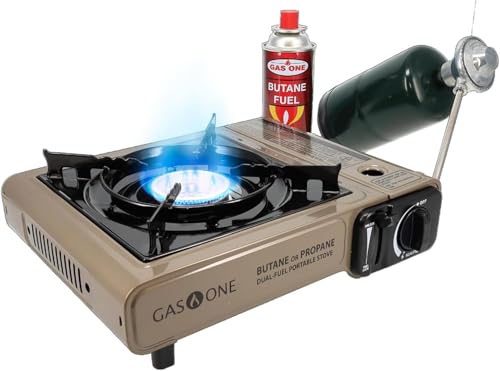
The Gas One GS-3400P is designed for versatility, supporting both propane and butane fuels. It operates on a single 8 oz butane cartridge or a 16.4 oz propane cylinder, giving flexibility for different trips. A propane converter regulator is included, simplifying setup, and the automatic piezo ignition eliminates the need for matches or lighters. An adjustable heat dial provides controlled cooking temperatures, and the stove includes a carrying case for easy transport and storage. This model suits campers who want a compact, adaptable cooking solution without sacrificing performance.
Gas One Portable Butane Camping Stove (Case)

This Gas One model emphasizes high output efficiency for quick boiling, delivering up to 7,650 BTU with 8 oz butane canisters. It features an automatic ignition and a safety mechanism designed to eject the canister if needed, enhancing security during operation. The stove is positioned for camping, tailgating, and outdoor cooking, with a focus on reliability and ease of use in outdoor settings. It’s a practical option for those who value quick-start ignition and robust performance in a compact unit.
Coleman Triton 2-Burner Propane Stove
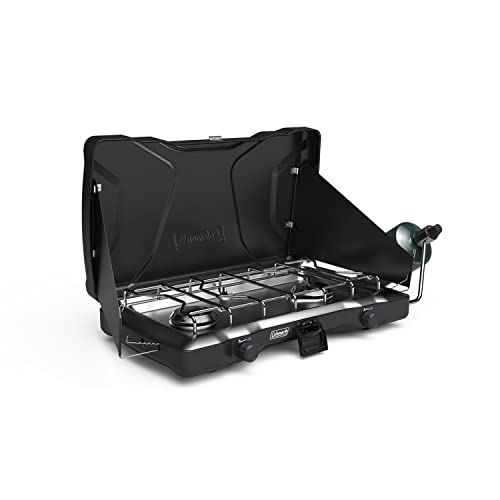
The Coleman Triton 2-Burner stove offers two adjustable burners with wind guards to stabilize flame in breezy conditions. A heavy-duty latch secures the unit when not in use, and portability is aided by a built-in handle. With a combined 22,000 BTUs of power, it enables versatile cooking for camping, tailgating, or backyard gatherings. The wind guards help maintain consistent heat, and the sturdy construction supports regular outdoor use.
ODSD 2 Burner Camping Stove
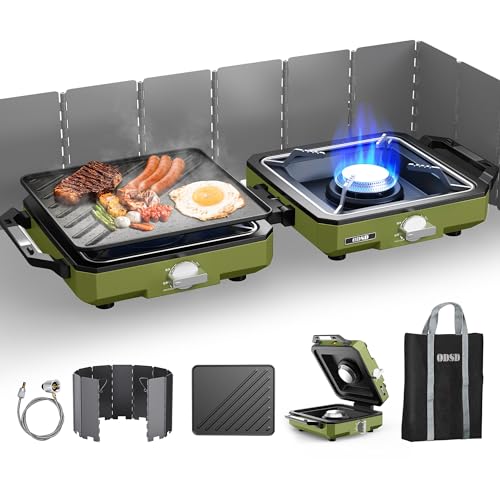
The ODSD stove combines two independently adjustable burners delivering up to 20,000 BTUs of cooking power. A windproof shield is included to stabilize flames, and the set typically includes a frying pan, coffee stand, and carry bag, making it a compact complete kit. Wind protection and included accessories help ensure safe, flexible outdoor cooking across various environments, from campsites to picnics. The magnetic closure design adds a layer of convenience for quick setup and tidy storage.
Stoke Voltaics Nomad Cooking System
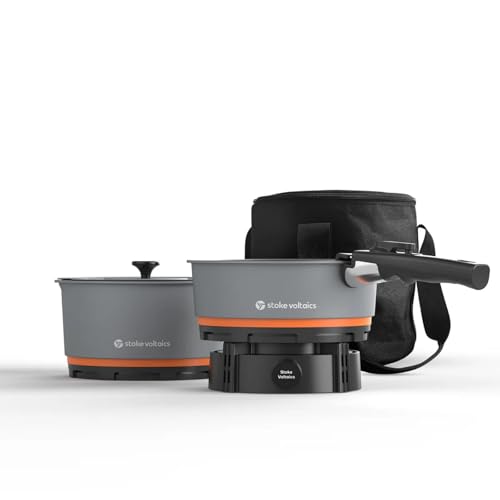
The Nomad Cooking System blends electric cooking with outdoor portability. It supports 200–1000 watts and is designed to work with car inverters, portable power stations, and RV power sources. Its windproof design ensures reliable heating even in challenging weather, making it a strong option for car camping, overlanding, and vanlife. Constructed with durable, food-safe materials, the Nomad emphasizes safety and consistent performance in transit or on site.
Buying Guide: How To Choose The Right Portable Stove
- Fuel Type and Availability: Consider whether you prefer gas (propane or butane), dual-fuel options, or an electric system. Gas stoves require fuel canisters or cylinders, while electric models depend on power sources like inverters or power stations.
- Heat Output and Burn Time: BTU ratings indicate cooking power. For quick boiling or high-heat cooking, higher BTUs help, but real-world efficiency also depends on wind, pot size, and heat control features.
- Ignition and Safety: Piezo ignition reduces the need for lighters or matches. Look for safety shut-offs, fuel cartridge ejection mechanisms, and CSA or other safety certifications where relevant.
- Portability and Durability: Weight, folded dimensions, and included carrying cases influence transportability. Durable housings and latches improve longevity in rugged outdoor use.
- Wind Management: Wind guards or shields stabilize flames, particularly for open-flame units. Electric stoves naturally fare better in wind but require power availability.
- Included Accessories: Carry bags, pans, grills, or pots affect overall value. Some kits include pans, stands, or frying accessories that save packing space.
- Power Availability: For electric models, assess power source compatibility—vehicle inverters, solar, or portable power stations—and runtime with typical loads.
- Cleaning and Maintenance: Removable, easy-to-clean components minimize hassle after cooking. Porcelain-coated gratings and rust-resistant materials extend life.
- Emergency Preparedness: If you’re building a kit, consider dual-fuel versatility or electric options that can operate without a traditional fuel supply when power is available.
Overall, the best choice depends on your typical outdoor setting: gas stoves excel in the field with reliable fuel access, electric systems suit vehicle-based trips with steady power, and dual-fuel options offer flexibility across conditions.