Pop up ice fishing tents offer fast setup, portable shelter, and reliable warmth when winter bites. This guide highlights five top options that balance space, insulation, and ease of use for American anglers. Each selection emphasizes hub-style construction, wind resistance, and quick deployment—ideal for moving between lakes and adapting to varying conditions.
Summary at a glance:
| Product | Size / Capacity | Insulation & Fabric | Setup | Key Advantage |
|---|---|---|---|---|
| Garvee 6×11.7×6.6 Ft (Blue) | 3-4 people | 420D double-layer insulated fabric | Hub design; under 60s | Strong warmth retention |
| Garvee 6x6x6.6 Ft (Red) | 3-4 people | 420D double-layer insulated fabric | Hub design; under 60s | Compact portability |
| VEVOR 87x79x78 (50 sq ft) | 4-6 people | 600D Oxford; 80g insulation | Pop-up; sturdy anchors | Higher capacity |
| GarveeLife 6-7 Person | 6-7 people | Insulated; durable | Lightweight; easy setup | Spacious comfort |
| THUNDERBAY 6 Person | 6 people | 300D Blackout fabric | Hub design; large interior | Extra warmth and shade control |
Garvee Hub Pop Up Shelter 6×11.7 Comfort

The Garvee 6×11.7×6.6 ft ice fishing shelter uses a hub design that enables one-person setup and takedown in under 60 seconds. Its blue exterior houses a 420D double-layer insulated fabric, designed to retain heat and block wind. The interior accommodates 3-4 anglers, making it suitable for friends or family outings. A supplied carrying bag supports transport to remote ice spots, and the windproof construction helps maintain stability in gusty conditions. This model is ideal for longer sessions where space and warmth matter most.
Key features include fast deployment, robust insulation, and a roomy interior that supports multiple anglers. The shelter’s dimensions translate to practical seating layouts and ample movement space for gear. While the insulation improves comfort, ebbs and flows in wind exposure may require proper anchor setup in high-wind scenarios. Overall, it does well in moderate extreme cold and adverse weather, offering consistent warmth for mid-sized teams.
Garvee Hub Pop Up Shelter 6×6 Comfort
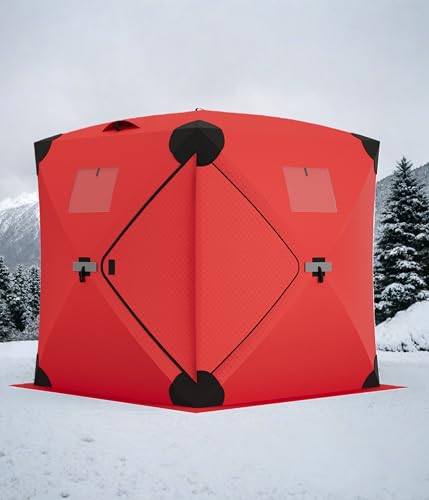
This red Garvee model compresses the footprint to 6x6x6.6 ft while maintaining a hub-style setup that reduces assembly time to under a minute. The same 420D insulated fabric enhances warmth, making it a practical choice for anglers who prioritize mobility without sacrificing comfort. The interior supports 3-4 anglers, aligning with casual to mid-sized outings. Reduced footprint makes this variant convenient for tighter ice conditions or when accessing crowded lakes.
Consider the trade-off between space and portability: a smaller shelter is easier to transport and setup, but you’ll have less room for gear. This option provides a balanced compromise, especially for solo or small-group trips where quick relocation matters as weather shifts.
VEVOR Pop Up Ice Fishing Tent 4-6 Person

The VEVOR 4-6 person shelter emphasizes weatherproofing and stability. Built with 600D Oxford fabric and an 80g insulation fill, it promises warmth in near-freezing conditions. A triple-layer fabric arrangement provides enhanced insulation, supporting comfort in environments as cold as 22°F (-5.5°C). The tent includes 9 ice anchors and 4 wind ropes to resist gusts, with a pop-up design for fast setup. While there can be slight seam leakage during heavy snowfall or rain, the overall build aims for strong wind and snow resistance, making it well-suited for moderate winter fishing clinics or group outings.
Airflow and light control are addressed by design features such as sturdy seams and a wide skirt for tie-downs. Users should verify ground conditions and ensure anchors are fully seated. This model balances space with stability, offering a practical option when several people fish together and want to stay warm without excessive bulk.
GarveeLife Large Ice Fishing Shelter

The GarveeLife model targets larger groups with a 6-7 person capacity and 68 square feet of fishable area. Lightweight enough for single-person transport, this shelter emphasizes quick setup and takedown while maintaining robust insulation. The interior design focuses on spaciousness and comfort, making it suitable for groups or families who want to maximize time on the ice without spending excessive effort on assembly. The insulation and durable construction are designed to withstand cold and wind, providing a reliable winter shelter choice for extended outings.
Pros include generous space and straightforward operation, but users should consider whether the larger footprint is feasible for their preferred fishing locations. Storage and transport space, along with anchor stability in windy conditions, are practical factors to weigh when selecting this model for frequent trips.
THUNDERBAY 6 Person Insulated Ice Shelter
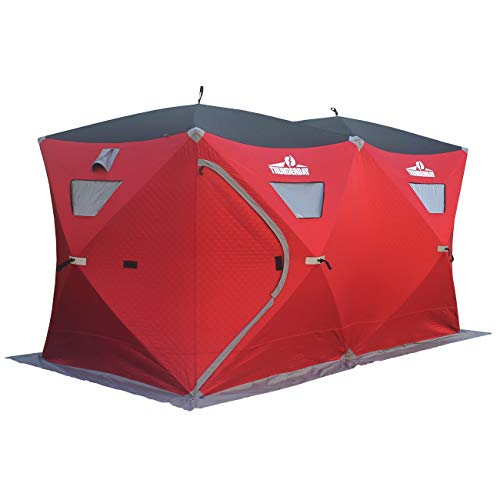
The ThunderBay 6-person shelter combines generous interior space with high-visibility features. Its 138″ x 70″ footprint plus hub-to-hub dimensions offer ample elbow room for multiple anglers and gear. The interior benefits from six windows and two ceiling vents that support practical ventilation and light control, while 300-denier polyester Blackout fabric helps shield against wind and reduces glare. This model emphasizes a balance between warmth, ventilation, and spaciousness, making it a strong option for larger groups that value comfort and visibility during long sessions.
Potential considerations include window exposure to cold drafts and the need for sturdy anchoring in windy environments. The combination of warmth retention and interior visibility can reduce fatigue during long days on the ice, but setup complexity may be slightly higher than the simplest hub shelters. Overall, it suits teams that prioritize space, light management, and durable construction.
Buying Guide: Key Considerations For Pop Up Ice Fishing Tents
Choosing the right pop up ice fishing tent depends on your typical trips, weather, and group size. Here are essential factors to weigh before buying:
- Size and capacity: Determine how many anglers you plan to accommodate and how much gear you must store. Larger shelters offer more comfort for groups but can be heavier and less portable.
- Insulation and fabric: Look for double-layer or triple-layer insulation and high-denier fabrics (e.g., 420D, 600D). Insulation retention directly affects warmth in subfreezing conditions.
- Wind and weather resistance: Strong seams, durable anchors, and wind ropes improve stability. Consider models with reinforced skirt seams and a sturdy hub frame for gusty environments.
- Setup speed and portability: Hub-style designs promise fast setup, often under a minute. A included carrying bag and compact size when packed will ease transport to remote lakes.
- Seams and leak risk: Some tents may leak at seams during heavy snow or rain. Check stitching quality and consider tents with sealed seams or weatherproof coatings for added protection.
- Ventilation vs warmth: Look for vents or interior layouts that balance warmth with airflow, reducing condensation. Blackout fabrics can reduce glare and improve comfort in daylight.
- Anchoring system: A comprehensive kit with multiple anchors and guy lines helps maintain stability on icy surfaces. Ensure anchor points and tie-down loops are sturdy and accessible.
- Included accessories: Carrying bags, storage pockets, and extra gear like anchors and ropes add value and convenience for frequent trips.
- Durability and warranty: Winter shelters endure harsh conditions. Favor rugged construction and reasonable warranties to protect your investment across seasons.
- Portability vs interior space: If you travel long distances or hike to ice beds, prioritize lighter models with efficient packing; if you fish near the shore, space can take precedence over weight.
When selecting among the options above, align the product’s capacity with your typical group size, prioritize insulation for colder regions, and evaluate whether you value extra interior space or easier transport. Weather patterns on your preferred lakes—such as frequent wind bursts or heavy snowfall—should guide anchoring and fabric choices. For family or group anglers, opting for a larger shelter with reliable heat retention and multiple access points can improve comfort, safety, and duration of ice time.