Finding the right insulated sleeping pad can transform a campout from restless to restful. This guide highlights top-rated options designed to keep you warm, supported, and comfortable on cold ground. Each pick balances insulation, weight, and packability, helping you choose the best pad for backpacking, car camping, or family trips.
The following summary table lists five dependable insulated sleeping pads, covering a range of thicknesses, R-values, and inflation methods. Use it to compare core specs at a glance and align with your camping style.
| Product | Brand | R-Value | Weight | Thickness |
|---|---|---|---|---|
| Gear Doctors Self Inflating Camping Sleeping Pad | Gear Doctors | 4.3 | 2.2 lbs | 1.5 in |
| Wevelel Memory Sleeping Pad | Wevelel | 9.5 | Not specified | 3.1 in |
| Hikenture Sleeping Pad | Hikenture | 6.2 | Not specified | 3.2 in |
| TREKOLOGY UL R7 Sleeping Pad | TREKOLOGY | 7.2 | 2 lbs | 4 in |
| Big Agnes Rapide SL | Big Agnes | up to 4.8 | Ultra-light | 3.5 in |
Gear Doctors Self Inflating Camping Sleeping Pad

The Gear Doctors pad emphasizes maximum comfort with an Oxylus self-inflating design. A 4.3 R-value foam layer delivers reliable insulation for cold ground, while its compact pack size (8 x 12 inches) packs down for easy transport. When inflated, it measures 72 inches by 20 inches by 1.5 inches, offering a stable sleep surface that reduces pressure points. Setup is streamlined: open the leak-proof valve, unroll, and add a few puffs of air to maintain firmness for days. This pad is positioned as a practical option for campers seeking warmth without carrying heavy gear.
Wevelel Memory Sleeping Pad

The Wevelel pad uses Hi-Tech memory foam with a high resilience density (50D) to deliver hotel-like comfort. Its 3.1-inch thickness and generous dimensions (77″ x 26.98″ x 3.1″) provide substantial support, with a tested weight capacity up to 800 lbs and a stability test showing no air leakage under pressure. It is designed for fast self-inflation: open three valves, allow expansion, close two valves, and finish with a short foot-pumped breeze to seal. The result is a durable, supportive sleep surface suited for car camping or backyard setups where comfort is paramount.
Hikenture Sleeping Pad
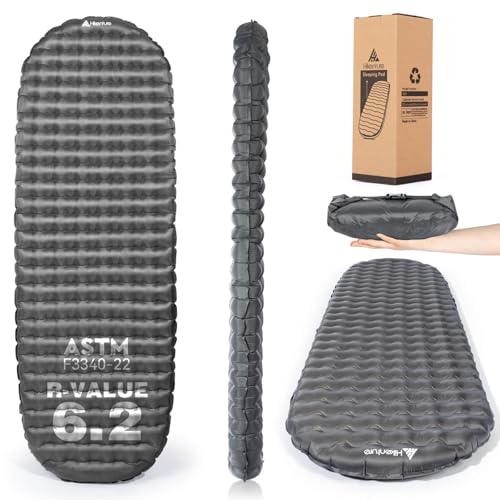
Hikenture offers a high-performance option with an ASTM F3340-22 compliant R-value of 6.2, reflecting strong cold-weather capability. The pad features an aluminum-film construction to reflect heat, maintaining warmth across seasons. With a lightweight design, it is easy to carry and includes a pump sack for convenient inflation and storage. The combination of warmth, comfort, and portability makes it a strong choice for winter treks or early-season camping where ground chill can be pronounced.
TREKOLOGY UL R7 Sleeping Pad

The TREKOLOGY UL R7 pad balances insulation and portability with a 7.2 R-value for all-season warmth. It weighs about 2 pounds and packs down extremely compactly, roughly the size of a water bottle, making it ideal for hikers who prioritize light gear. When inflated, it offers a generous 70.8″ x 24″ surface and a 4-inch thickness to prevent bottoming out. The construction emphasizes durability with a wireframe-like interior and a quilted top that enhances comfort on uneven terrain.
Big Agnes Rapide SL

The Big Agnes Rapide SL combines premium insulation with a lightweight design. It delivers up to 4.8 in warmth depending on conditions and a quilted top for a cushioned sleeping surface. The pad is designed for minimal bulk without sacrificing warmth, using heat-reflective materials and a compact packed profile. It’s suitable for backpackers who want reliable season-spanning comfort with a focus on durability and warmth in shoulder-season conditions.
Buying Guide: Key Considerations For Choosing An Insulated Sleeping Pad
All insulated sleeping pads share the goal of warmer, more comfortable sleep while reducing pack weight. When choosing, consider the following factors to align a pad with your camping style and climate:
- R-value and climate: Higher R-values indicate better insulation. For winter camping or high-altitude trips, look for 6.0+; for three-season use, 4.0–6.0 is common.
- Thickness and support: Deeper thickness (3–4 inches) reduces bottoming out on uneven ground and improves pressure distribution, especially for side sleepers.
- Inflation method: Self-inflating foam cores simplify setup, while air pads with pump sacks offer fast inflation but may require more maintenance to prevent leaks.
- Weight and packed size: Backpackers prioritize lighter weights and compact packs. Car campers may accept bulkier, more luxurious options for comfort.
- Durability and materials: Look for ripstop fabrics and reinforced seams. Foam cores tend to be durable but heavier; air-filled pads save weight but may require care to avoid punctures.
- Repair and replacement: Some pads include repair patches or carry kits. Consider availability of replacement parts if you’re venturing far from civilization.
- Seasonal versatility: If you camp year-round, a pad with multi-season insulation and a sturdy top surface for weather variations is beneficial.
Across the featured options, you’ll find a spectrum of approaches—from the high-insulation, memory-foam-based Wevelel to the ultralight TREKOLOGY UL R7. Each pad targets distinct priorities: warmth, weight, or comfort. When selecting, align the pad’s insulation, thickness, and inflation method with your typical camping terrain and expected conditions. If you routinely face cold grounds, prioritizing a higher R-value and robust surface will improve your sleep quality and overall outdoor experience.