Discover top insulated foam sleeping pads designed to improve comfort, warmth, and support on camping trips. This guide compares five dependable options, focusing on durability, insulation, setup, and portability for car trips, tents, and backpacking adventures.
| Product | Brand | Key Benefit | Insulation / R-Value |
|---|---|---|---|
| Wevelel Memory Sleeping Pad | Wevelel | Ultra-thick memory foam with high resilience | High (3.1″ foam; up to 800 lbs capacity) |
| Gear Doctors Self Inflating Pad | Gear Doctors | Compact, portable self-inflating design with 4.3 R-value foam | R-Value 4.3 |
| Therm-a-Rest Z Lite Original | Therm-a-Rest | Lightweight, durable closed-cell foam with classic design | R-Value 1.7 |
| HiiPeak Memory Sleeping Pad | HiiPeak | Hi-Tech memory foam for contouring support | 9.5 R-Value (insulated) |
| PineHike Camping Sleeping Pad | PineHike | Built-in electric pump for quick inflation | 9.5 R-Value |
Wevelel Memory Sleeping Pad

The Wevelel Memory Sleeping Pad features Hi-Tech memory foam with a density of 50D, delivering superior resilience for even weight distribution and reduced pressure at contact points. The 3.1-inch thick pad (77″ x 26.98″ x 3.1″) elevates sleepers off hard ground and is tested to support up to 800 lbs, with 24-hour static pressure durability. It offers fast self-inflation through high-density foam and a simple three-valve setup for quick fill, followed by a brief 10-second expansion. This pad aims to mimic luxury hotel comfort in outdoor settings, providing substantial cushioning for restful sleep during camping and car trips.
Gear Doctors Self Inflating Camping Sleeping Pad
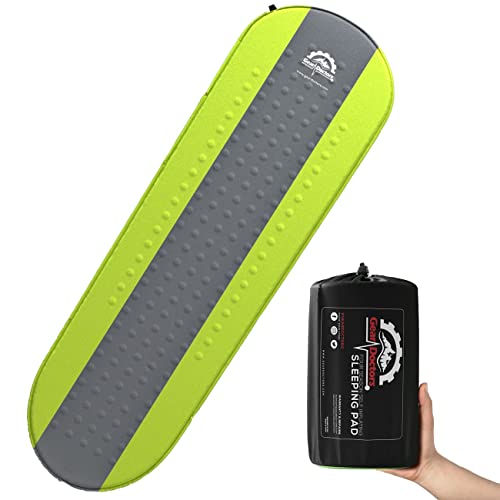
Gear Doctors offers a self-inflating pad featuring thermo-insulation with a 4.3 R-value foam layer. The unit compresses to a compact size (8 x 12 inches) and expands to 72″ x 20″ x 1.5″, balancing portability with comfort. The setup is described as simple: twist the valve to begin inflation, with air filling to maintain its firm shape for days. Its design emphasizes warmth, portability, and ease of use for campers who need a reliable mat that travels light yet delivers dependable cushioning.
Therm-a-Rest Z Lite Original

The Therm-a-Rest Z Lite Original is a lightweight, closed-cell foam option known for durability and value. Its accordion-fold design makes it highly packable and resistant to punctures or leaks. The pad uses dimples to trap heat, enhancing warmth in cold conditions. With an insulation rating of R-Value 1.7, it remains a practical choice for minimalist setups or as a backup pad where weight and pack size are critical considerations for ground sleeping in tents or alpine environments.
HiiPeak Memory Sleeping Pad (Compact)
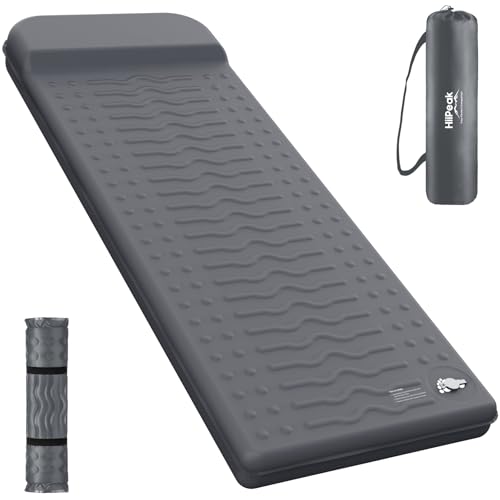
HiiPeak’s Memory Sleeping Pad combines Hi-Tech memory foam with a compact profile and a 9.5 R-value for robust insulation. It folds down to a compact form while unfolding to a generous 76.7″ x 27.7″ with a 3-inch thick core for plush support. It features a rapid inflation and deflation process, facilitated by a dual-layer valve system and a foot-pump option. This pad targets backpackers and car campers who want high warmth without sacrificing portability or storage efficiency.
PineHike Camping Sleeping Pad

The PineHike pad features an upgraded sponge design for enhanced comfort and noise reduction, paired with an integrated smart pump that inflates quickly. Its One-Touch Start simplifies setup, and the rechargeable pump supports multiple inflation cycles. The pad is designed to be easy to store and transport, with a quick-deflate function that reduces bulk, making it suitable for car camping and shorter backpacking trips that demand speed and efficiency without sacrificing warmth.
Buying Guide
- Insulation and warmth: Look for higher R-values (4.0+ for frost-prone nights) versus standard ground insulation. Foam pads tend to hold warmth well but compare R-values to fit your climate.
- Weight and pack size: For backpacking, prioritize lighter pads and compact folding designs. Foam options are heavier but excel in durability and resistance to punctures.
- Comfort and support: Memory foam cores deliver contouring support and pressure relief, while closed-cell foam provides reliable, durable warmth with less weight variability.
- Durability and puncture resistance: Foam-based pads are less prone to punctures than air pads. Consider thickness (3″–4″) if you sleep on uneven ground.
- Setup and portability: Self-inflating designs balance ease of use with compactness. Integrated pumps add convenience but may increase weight.
- Ground conditions: For rocky or cold camps, choose pads with robust insulation and a non-slip surface to reduce movement and improve sleep quality.
- Durability testing and weight rating: Review load tests and warranty terms. Pads that support 600–800 lbs can offer extra security for heavier users or shared sleeping arrangements.
- Usage scenarios: Car camping can tolerate thicker, more cushioned pads; backpacking benefits from lighter, compact options with quick inflation mechanisms.