Winter ice fishing demands shelter that blocks wind, conserves heat, and supports safe, extended sessions on the ice. The following picks emphasize stove jack compatibility and reliable insulation, helping anglers stay warm while focusing on their catch. The selections balance space, durability, and ease of setup for boatside or remote ponds across America.
| Product | Brand | Key Features |
|---|---|---|
| ABXMAS Ice Fishing Shelter 3-4 Person | ABXMAS | Stove jack compatible, 600D insulated, 3-4 person, 43 sq ft fishable area, windproof |
| Nordic Legend Aurora Series Lodge | Nordic Legend | Pop-up design, 80×80 inside, 129 sq ft fishable area, insulated fabric |
| Garvee Pop Up Ice Fishing Tent (3-4 Person) | Garvee | Hub-style, 420D insulated, fast setup, windproof |
| Pop Up Ice Fishing Tent (3-4 Person, Red) | Garvee | Hub-style, 420D insulated, 3-4 person, fast setup |
| THUNDERBAY 6 Person Insulated Ice Shelter | THUNDERBAY | Large interior, blackout fabric, wind and light blocking, 6-person |
The following sections highlight five strong options for ice fishing tents with stove jack or compatible heat features, reflecting different sizes, setups, and budgets.
ABXMAS Ice Fishing Shelter 3-4 Person

The ABXMAS shelter is designed for quick ice-fishing setups with a pop-up style that unfolds on all sides. It accommodates 3-4 people and offers 43 square feet of fishable area. Its 600D insulated fabric is paired with a double sewing skirt to improve heat retention by roughly 40% compared with non-insulated models. Practical features include two doors to avoid passing through another angler’s space, eight night reflective strips for visibility, and a zinc alloy internal bracket for light but strong construction. The blackout interior coating helps reduce glare and improves water visibility under certain lighting conditions.
Nordic Legend Aurora Series Lodge

The Nordic Legend Aurora Lodge is a pop-up shelter with generous interior space and insulation designed to maximize warmth. It features 300D textured insulation fabric with a silver coating to retain heat. The lodge design yields a broad fishable area and dimensions about 80 inches by 80 inches of usable floor space, with a center height around 83 inches. The interior footprint translates to approximately 129 square feet of fishing area, offering a roomy setup for several anglers. The model uses a 2-piece door system with a door guard webbing to ensure easy access in and out, while maintaining a stable, wind-resistant structure.
Garvee Pop Up Ice Fishing Tent (3-4 Person)

The Garvee hub-style shelter emphasizes ease of use, with a setup time under 60 seconds and compact transport. It uses 420D double-layer insulated fabric for strong heat retention, maintaining warmth even in extreme cold. The shelter is spacious (roughly 11.7 feet by 6 feet by 6.8 feet in some models) and supports 3-4 anglers. The design prioritizes wind and snow resistance, aided by sturdy poles and a bottom hem for better wind protection. The hub mechanism allows one-handed assembly and efficient breakdown once the fishing session ends.
Garvee Pop Up Ice Fishing Tent (3-4 Person, Red)
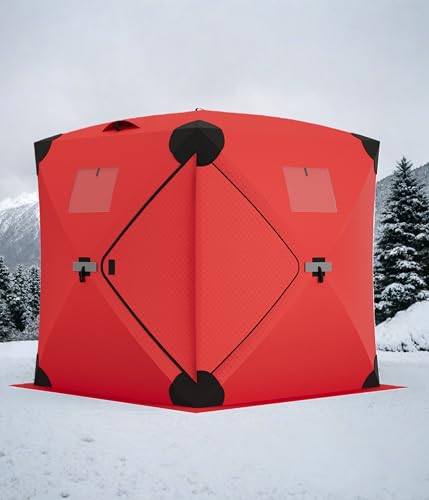
This Garvee model mirrors the hub-style setup and heat retention benefits of the other Garvee option. It offers a comparable footprint and capacity, designed for quick assembly and stable performance in windy conditions. The 420D insulated fabric provides strong frost resistance and helps maintain a warm interior, making it suitable for longer winter outings or larger groups who require ample space.
THUNDERBAY 6 Person Insulated Ice Fishing Tent
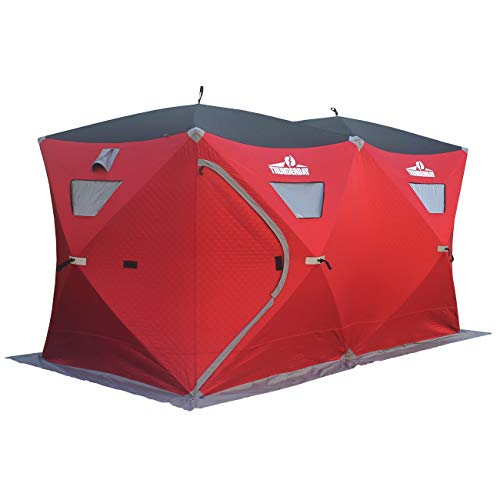
THUNDERBAY’s 6-person insulated shelter provides a large internal space with round dimensions and a total fishable area of approximately 68 square feet. The tent features blackout fabric (300 denier) to block wind and light, contributing to heat retention. With six interior windows and two ceiling vents, the design aims to balance ventilation and warmth. The extra interior space and strong insulation make this model well-suited for groups who need more room or longer sessions in harsher weather conditions.
Buying Guide: Key Purchase Considerations
- Size and capacity: Choose a shelter that comfortably fits your typical crew. For solo or two-person trips, compact tents save space and heat more efficiently; for family trips, larger hubs provide ample movement.
- Stove jack compatibility: Verify that the shelter either includes a stove jack or can accommodate a stove jack safely, with adequate clearance from walls and fabric. Consider double-layer insulation and heat retention features to maximize warmth when a stove is used.
- Insulation and fabric: Look for high-denier outer fabrics (e.g., 420D, 600D) with insulating layers and a reflective interior finish to minimize heat loss. Windproof and water-resistant properties improve winter performance.
- Setup and portability: Hub-style and pop-up designs save setup time and reduce hassle on the ice. Weigh the shelter and assess storage options for transport to remote locations.
- Durability and stability: Ground stakes, ice anchors, and sturdy poles improve stability in wind, snow, and slush. Ensure the fabric has reinforced seams and a bottom hem for weather resistance.
- Ventilation and blackout features: Adequate vents prevent condensation buildup. Blackout interiors reduce glare and help with visibility when it’s bright outside or when a stove is in use.
- Interior layout and access: Multiple doors and wide entry points prevent crowding around the fishing spots and streamline movement in and out of the shelter.
- Safety and maintenance: Confirm the manufacturer’s guidelines on stove usage, carbon monoxide safety, and routine checks. Clean, dry, and store shelters properly to extend their life.
- Price-to-performance balance: Compare insulation quality, space, and stove compatibility against the shelter’s weight and setup time to choose the best value for your typical ice fishing conditions.