Finding a heated water hose that reliably prevents freezing is essential for RVers in winter. The right hose combines safe drinking-water materials with energy-efficient heating and durable construction. Below are five top options that balance safety, performance, and value, helping you keep your RV’s water running even in subfreezing temperatures.
| Product | Brand | Length | Freeze Protection | Notable Feature |
|---|---|---|---|---|
| Camco 25-Ft Heated Water Hose (22911) | Camco | 25 ft | -20°F/-28°C | Energy-saving thermostat |
| REHOSEUP 50FT Heated Water Hose | REHOSEUP | 50 ft | -45°F | Double washers; smart temperature system |
| Camco 50′ Heated Water Hose (22912) | Camco | 50 ft | -20°F/-28°C | NSF/ANSI 61 drinking water hose |
| Kohree 50FT Heated Water Hose | Kohree | 50 ft | -40°F | Aluminum ends; BPA-free |
| Bipeoo 30FT Heated Water Hose | Bipeoo | 30 ft | -45°F | Five-layer design; patent-pending tech |
Camco 25-Ft Heated Water Hose (22911)

Camco’s 25-foot heated water hose uses a premium NSF/ANSI 61 certified drinking-water hose, ensuring lead-free, BPA-free, and phthalate-free materials. The internal heating cable provides freeze protection down to -20°F (-28°C) while an energy-efficient thermostat minimizes power use. The setup includes an 18 AWG, 6-foot power cord with a clear LED indicator, making it easy to confirm heating status. It is suitable for RVs, livestock water lines, and other outdoor applications, ensuring a continuous water supply even in cold weather.
REHOSEUP 50FT Heated Water Hose

REHOSEUP’s 50-foot heated hose is designed for multi-scene use, including RVs, camping, and garden setups. It prevents water from freezing down to -45°F with a smart temperature system that gradually thaws ice to water. The product features double washers at both ends to reduce leaks and a durable exterior jacket to guard against weather. With clear installation instructions and videos, setup is straightforward. The hose uses safe materials to avoid water contamination and is built for long-term outdoor use.
Camco 50′ Heated Water Hose (22912)
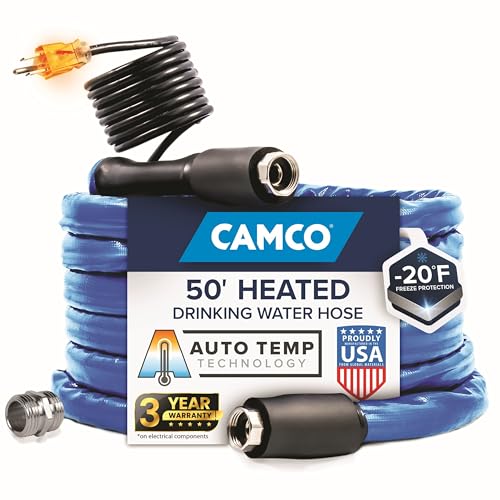
This 50-foot Camco heated hose combines NSF/ANSI 61 certified drinking-water tubing with a thermostat-controlled heating element to provide freeze protection down to -20°F (-28°C). The hose is designed for energy efficiency, drawing power only as needed. It runs on 120VAC and includes an 18 AWG, 6-foot power cord with an LED indicator to show heating status. Ideal for longer RV setups, winter camping, and livestock watering where a longer reach is beneficial.
Kohree 50FT Heated Water Hose
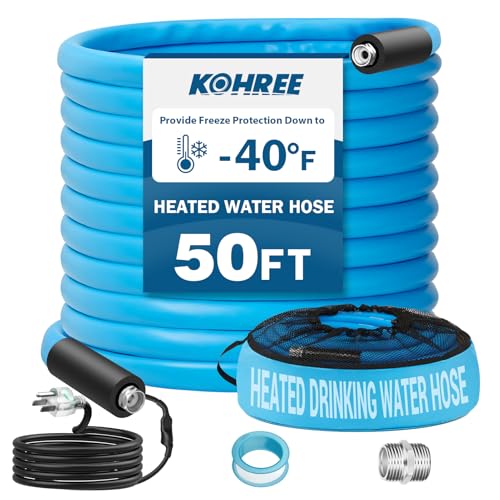
Kohree’s 50-foot heated hose is designed for extreme cold with a -40°F capability. It features a smart self-regulating internal thermostat to keep water flowing smoothly and provide energy efficiency. The hose ends are aluminum with rubber grips for secure connections, and it is certified BPA-free and CA65 compliant, ensuring safe drinking water. Quick-connect fittings and leak-free performance make it a robust option for RVs, campers, trucks, and outdoor water needs in winter.
Bipeoo 30FT Heated Water Hose

Bipeoo offers a compact 30-foot heated hose with a maximum freezing protection down to -45°F. It uses a five-layer design with a robust outer jacket and stainless steel fittings to prevent leaks and withstand cold conditions. The hose emphasizes safety with food-grade materials, lead- and BPA-free composition, and a new design that integrates intelligent heating and temperature sensing. It’s suitable for RVs, gardens, and outdoor water uses where space or shorter reach is preferred.
Buying Guide
Key considerations when choosing a heated water hose for an RV include safety, compatibility, and efficiency. First, ensure the hose is certified for drinking water (NSF/ANSI 61 or CA65-compliant) to avoid contaminating your water. Material quality matters: look for BPA-free hoses and robust end fittings to prevent leaks. Freeze protection should align with your climate; many models offer protection down to -20°F to -45°F. Heating technology matters: self-regulating or thermostat-controlled systems can save electricity by heating only as needed. Length and weight affect setup and storage; longer hoses are convenient but heavier and bulkier. Finally, check for ease of installation, included adapters, and clear instructions to ensure you can set up quickly in cold conditions. Compare warranties and user reviews for real-world performance and reliability in winter camping and RV life.
Additional perspectives include energy efficiency versus heating speed (faster heating may consume more power), material durability in outdoor environments, and cross-compatibility with various water sources. For RV owners with frequent winter travel, longer hoses with reliable leak resistance and safe materials provide peace of mind. If you frequently camp in extremely cold environments, prioritize models rated to -40°F or -45°F, even if they cost a bit more, to minimize risk of frozen lines. Consider storage options such as carrying a storage bag or compact coil when not in use to keep hoses in good condition and ready for next trip.