For campers and travelers who rely on a CPAP machine, a reliable portable power source is essential. The following hand-picked options deliver off-grid charging capabilities, multiple output ports, and battery capacities designed to keep CPAP devices running through the night. This guide compares top-rated models suited for camping and outdoor use, highlighting charging options, compatibility with common CPAP machines, and safety features. Each product is evaluated for portability, power delivery, and durability to help you choose the right portable CPAP battery backup.
| Product | Brand | Key Benefit |
|---|---|---|
| Renogy 76800mAh 276.48Wh | Renogy | 100W USB-C PD, 12V/24V CPAP support |
| EnginStar Portable Power Station 300W | EnginStar | 296Wh, multiple ports, 110V AC outlet |
| Jackery Portable Power Station Explorer 300 | Jackery | 293Wh, fast recharge, multiple outputs |
| Renogy 72000mAh 266Wh | Renogy | Two USB-C PD ports, 150W CPAP capability |
| Medistrom Pilot-24 Lite | Medistrom | CPAP battery backup with dedicated CPAP cables |
The selections emphasize CPAP compatibility, off-grid charging versatility, and rugged design suitable for camping environments. Read on for detailed product sections and practical buying guidance to match your camping style and CPAP needs.
Renogy 76800mAh 276.48Wh Power Bank Brick

Renogy’s high-capacity power bank delivers versatile charging for CPAP machines and multiple devices. It features a 100W USB-C PD port for fast laptop and device charging, a 12V/24V DC port suitable for CPAP setups, a car socket for pumps and small fridges, and 15W wireless charging. The unit supports up to six devices simultaneously and is designed for off-grid camping scenarios. Note that it is not TSA-approved for air travel, so plan accordingly when packing for trips.
CPAP compatibility and usage tips: The DC port supports common CPAP models with appropriate cables. For extended runs, turning off heater and humidifier during use can help stretch battery life. Fast recharging is possible via USB-C PD, car socket, wall outlet, or compatible solar panels, making it a flexible backbone for weekend camping.
EnginStar Portable Power Station 300W 296Wh

EnginStar offers a compact power station with 296Wh capacity and 300W AC output. It includes eight output ports, including two 110V pure sine wave outlets, DC outputs, USB-C (18W), and USB-A ports. Its multi-port design enables charging of smartphones, laptops, cameras, CPAP devices, and small appliances concurrently. The unit features a battery management system for voltage and temperature control, prioritizing safety and longevity for extended outdoor use.
CPAP compatibility and usage tips: The unit provides a stable DC or AC output suitable for CPAP setups with appropriate cables. For CPAP devices without full-size AC adapters, use the DC output or AC outlets as specified by your CPAP model. Proper heat management helps maximize runtime on cold nights.
Jackery Explorer 300 Portable Power Station
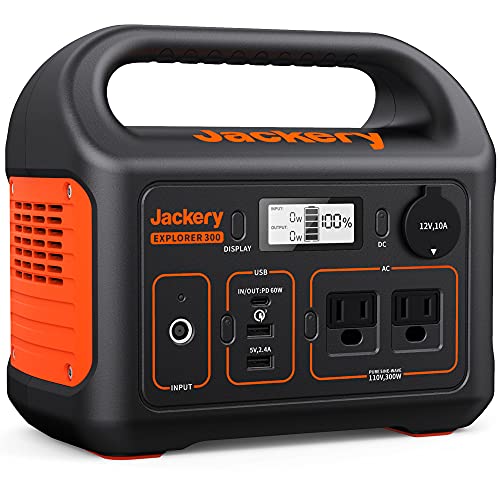
The Jackery Explorer 300 provides 293Wh of lithium power with two Pure Sine Wave AC outlets, a PD USB-C port, and multiple USB-A and DC options. It charges quickly via wall outlets or compatible solar setups and supports powering several devices at once. Weighing around 7.1 pounds, it balances portability with ample output suitable for CPAP systems, tablets, and cameras during camping trips.
CPAP compatibility and usage tips: The PD USB-C port can handle modern CPAP setups with the correct cables. The device’s safety features help protect sensitive equipment. For longer trips, consider pairing with solar charging to maintain runtime without access to mains power.
Renogy 72000mAh 266Wh Power Bank

This Renogy model updates a large-capacity pack with dual USB-C PD ports: one up to 60W for laptops and a second up to 27W for phones, enabling flexible device charging on the go. The battery supports CPAP use via a 12V/15A cigarette port (150W max) for several CPAP models, though CPAPs requiring AC may need an adapter. A practical note: while the unit can power CPAP devices, certain models without dedicated AC compatibility require a specific setup for longer runtimes.
CPAP compatibility and usage tips: Turn off heater and humidifier for longer CPAP sessions when running on battery. Use the appropriate CPAP adapters and cables to connect your machine’s power input to the 12V/15A port for efficient operation off-grid.
Medistrom Pilot-24 Lite Bundle

The Pilot-24 Lite offers a compact backup power option designed for CPAP devices, with bundled cables for common machines like ResMed S9, AirSense 10, and AirMini. This setup emphasizes uninterrupted sleep during outages with a focus on quick setup and reliable recharging. Its aluminum construction and LG cells indicate durability and consistent performance for camping use, where ruggedness matters as much as portability.
CPAP compatibility and usage tips: The bundle includes cables tailored to popular CPAP models and aims to deliver uninterrupted sleep therapy when main power is unavailable. Its smaller form factor is ideal for lightweight backpacking but may require a separate primary power source for longer stays with higher energy needs.
Buying Guide: Key Purchase Considerations And Comparisons
When choosing a portable CPAP battery for camping, consider the following factors to align with your travel style and CPAP requirements:
- Power capacity and run-time: Higher watt-hours (Wh) provide longer CPAP runs. If you use humidification or heating, factor in additional power draw and potential early depletion.
- CPAP compatibility: Confirm that the unit supports your CPAP model via DC, USB-C PD, or AC with the appropriate adapters. Some CPAPs require a dedicated inverter or specific cables.
- Output options: A mix of USB-C PD, DC 12V/24V, and AC outlets offers flexibility for charging multiple devices beyond CPAP, such as phones, tablets, and cameras.
- Recharge methods: Look for USB-C PD fast charging, car outlet compatibility, wall outlets, and solar panel support for off-grid recharging during extended trips.
- Portability vs. capacity: Heavier, higher-capacity packs deliver longer runtime but are less portable. Balance weight and energy needs with trip duration and hiking plans.
- Safety and durability: Devices with battery management systems, temperature control, and rugged enclosures reduce risk during outdoor use and protect sensitive CPAP equipment.
- Upgrade considerations: Some models offer newer PD ports (e.g., 60W or 100W) to handle laptops and more demanding devices, which can be advantageous for longer trips or work needs.
- Noise and heat: Quiet operation and efficient thermal management matter for comfort during nighttime CPAP use and camping environments.
Compared options show trade-offs between capacity, size, and CPAP-specific features. Smaller models suit short trips with lightweight CPAP devices, while larger packs excel for longer weekends or multi-day excursions with higher energy demands. Always review your CPAP’s power cable and adapter requirements and verify compatibility with the chosen battery’s ports before purchase.