When camping in cooler weather, a compact heater can transform a tent into a cozy retreat. This guide highlights five reliable options that balance warmth, safety, and portability for outdoor adventures. Each product below offers different BTU outputs, fuel types, and design features to suit your camping style—from car-camping setups to backcountry tents. Review the selections to pick the heater that best matches your space, duration, and fuel preferences.
| Product | Brand | BTU | Fuel | Approx. Coverage |
|---|---|---|---|---|
| 9,000 BTU Portable Buddy Radiant | Mr. Heater | 9,000 | Propane | Up to 225 sq ft |
| 3,800 BTU Little Buddy | Mr. Heater | 3,800 | Propane | Up to 95 sq ft |
| Naturehike Portable 3-in-1 | Naturehike | 3,750 | Butane/Propane | 54-108 sq ft |
| Uniflasy 4,300 BTU 2-in-1 | Uniflasy | 4,300 | Propane/Butane | Varies by setup |
| MOZODAWN 13,000 BTU 2-in-1 | MOZODAWN | 13,000 | Propane | Indoor/outdoor versatile use |
9,000 BTU Portable Buddy Radiant Heater

Mr. Heater’s 9,000 BTU Portable Buddy delivers radiant heat suitable for larger tent footprints or chilly nights. It offers dual heat modes with either 4,000 or 9,000 BTU per hour, providing flexible warmth depending on shelter size and outdoor conditions. The unit is designed and approved for indoor and outdoor use, making it a practical choice for camping setups that require consistent heat without a cluttered footprint. It can heat areas up to roughly 225 square feet, assuming adequate ventilation and safe operation.
3,800 BTU Little Buddy Portable Heater
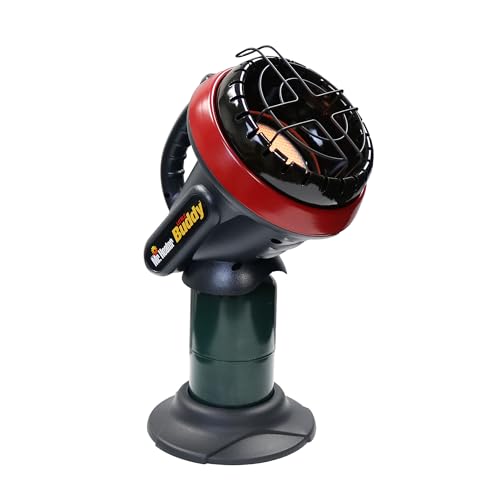
The Little Buddy is a compact option from Mr. Heater with 3,800 BTU per hour. It’s designed for propane use and is suitable for heating smaller tent spaces up to about 95 square feet. Its small footprint and targeted warmth make it ideal for solo campers or couples who prioritize portability and quick warm-up times. This unit emphasizes ease of use while maintaining reliable radiant heat for short duration camping trips.
Naturehike Portable 3-in-1 Camping Heater

Naturehike combines heating with multi-function use in a 3-in-1 design. This 3,750 BTU butane-powered heater doubles as a cooking surface and warming shelf, making it a versatile choice for campers who want to prepare meals and keep heat localized in the tent. It claims efficient heating for spaces ranging from about 54 to 108 square feet and can run on an 8 oz butane canister for extended sessions (up to 240 minutes, depending on power settings). The integrated design reduces clutter and supports quick meal prep during cold outings.
Uniflasy Tent Heater for Camping

Uniflasy offers a compact 4,300 BTU two-in-one heater designed for fast heating with energy efficiency. It supports both propane and butane gas options, providing flexible fuel compatibility for camping, hiking, and fishing trips. The dual ignition modes include a built-in piezoelectric ignition and a high-altitude ignition feature, which facilitates rapid ignition in challenging weather or elevation. The device’s portability and flexible fuel options make it suitable for varied tent environments and quick warmth when arriving at the campsite.
MOZODAWN 2-in-1 Propane Heater & Stove

MOZODAWN merges heating and cooking with a 13,000 BTU maximum output, offering robust warmth and an integrated cooking option for tents, camping, or garage setups. The heater features a stainless-steel threaded interface, a durable heating element, and an adjustable control, along with a portable handle for convenient transport. Its 360-degree radiant heating capability makes it a strong choice for truly cold environments where both heat and hot meals are desirable during extended trips.
Buying Guide: Key Purchase Considerations
- Space and BTU needs: Larger tents require higher BTU outputs, but smaller shelters benefit from compact units with 3,500–6,000 BTU ranges. Always verify space coverage and ensure you select a heater suited for the tent size and occupant load.
- Fuel type and availability: Propane and butane are common for camping heaters. Consider fuel canister availability, shelf life, and how easy it is to source replacements at your destination.
- Ventilation and safety: Use heaters in well-ventilated areas to reduce carbon monoxide risk. Look for safety features such as tip-over protection, automatic shutoff, and sturdy bases to prevent accidents inside tents.
- Portability and weight: For backpackers, ultra-compact units or stove-and-heat combos work best. Car campers may prioritize higher BTU and stability over weight.
- Multi-function capabilities: Some models combine heat with cooking surfaces or warming shelves, saving space and enhancing convenience for longer trips.
- Ignition and altitude performance: Piezo ignition is common, with some models offering altitude-optimized ignition. This matters in high-elevation campsites where starting a flame becomes harder.
- Fuel efficiency and runtime: Check runtime per canister at your expected heat setting. Efficient models extend use between fuel purchases, reducing weight and bulk.
- Durability and build quality: Look for corrosion-resistant components and durable materials, especially for outdoor exposure and rough handling during travel.
- Environmental considerations: When using any heater outdoors, ensure proper wind sheltering and avoid placing heaters near flammable materials or within enclosed sleeping areas.
- Cost of ownership: While initial price matters, factor in ongoing fuel costs, maintenance, and replacement parts when evaluating long-term value.
This selection emphasizes portability, safety features, and practical warmth for camping tents. Users should assess space, climate, and duration to determine whether a high-BTU model for sustained use or a smaller, dual-function unit for cooking and heating best fits their trips. Always follow the manufacturer’s instructions for setup, ventilation, and shutdown to ensure safe operation in outdoor environments.