When outdoor nights turn frigid, a battery heated sleeping bag can be a game changer. These bags blend insulation with portable heat to extend camping seasons, keep car campers comfy, and support hikers who push past traditional sleeping bag limits. Below is a curated guide to five top-rated options, covering how they heat, how they fit, and what to consider before you buy. Each pick is evaluated for warmth, battery compatibility, ease of use, and overall value for American outdoor enthusiasts.
| Product | Brand | Key Heat Features | Size Range | Power Requirements |
|---|---|---|---|---|
| Antarctica Gear Heated Sleeping Bag | ANTARCTICA GEAR PRO | 5 heating areas; 3 levels | 7.5 ft by 3 ft | 16000mAh 12V |
| KingCamp Heated Sleeping Bag | KingCamp | 3 heat settings; 5V/9V power | XL 86.6 x 39.4 in | Power bank required |
| MANTUOLE Heated Sleeping Bag | Mantuole | 5 heating zones; USB 5V/2A | 7.5 x 3 ft | USB power banks |
| KingCamp 6 Heating Zones Heated Bag Pad | KingCamp | 6 zones; timer options | 78 x 26 in | 5V/2A USB |
| ActionHeat Electric Heated Sleeping Bag | ActionHeat | 3 heated panels; FAR infrared | Mummy style | 5V battery powered |
Choosing the right heated sleeping bag depends on how you plan to use it. If you’re car camping in freezing conditions, a larger rectangular design with multiple heating zones and a durable shell can maximize comfort. If you’re backpacking, weight, packing size, and battery options become paramount. The following sections highlight five strong contenders, summarizing why each might fit your camping style, climate, and gear setup.
Antarctica Gear Heated Sleeping Bag Overview

The Antarctica Gear model features a 7.5×3-foot rectangular design suitable for tall sleepers, with a brushed lining for comfort. Its five heating areas distribute warmth across the shoulders, back, hips, and feet, controlled by three heat levels. A 16000mAh 12V battery pack supplies power, allowing quick heat up to 131℉. Lightweight yet roomy, it converts into a blanket if the situation calls for it, and its water-resistant exterior helps manage damp nights on rugged trails.
KingCamp Heated Sleeping Bag For Adults
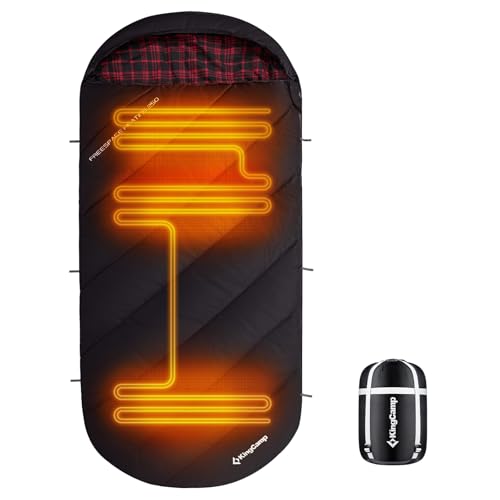
This KingCamp bag emphasizes instant warmth and flexibility. It supports a range of power banks (5V2A or 9V2A) to deliver heat within seconds, with up to 8 hours in low mode using a 5V2A bank or around 6 hours with a 9V fast charger. Heat settings include 122°F, 104°F, and 86°F, and the design prioritizes shoulder, back, hip, and feet warmth while remaining comfortable for extended nights outdoors. The XL footprint provides ample space for movement and sleep orientation.
MANTUOLE 5-Zone Heated Sleeping Bag
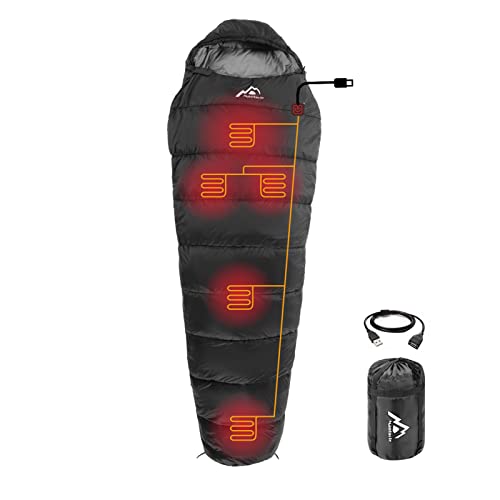
The MANTUOLE option uses five USB-powered heating pads, heating zones across shoulders, back, hips, and feet. It requires a 5V/2A USB power source (power bank not included) and supports a wide temperature range suitable for chilly midnight camping. At 7.5×3 feet and a light 3.6-pound weight, it balances generous space with portability, making it a practical pick for car campers who want reliable heat without heavy hardware.
KingCamp 6-Zone Heated Sleeping Bag Pad
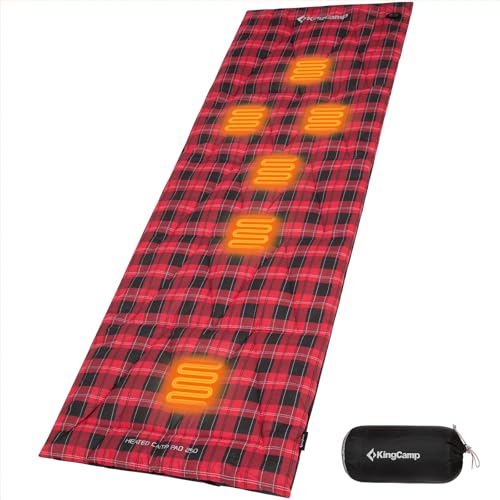
KingCamp’s six-zone heating system targets critical body areas for full-night warmth. This pad-style bag uses 5V/2A USB power from common chargers or power banks, with three heat levels and a timer function to manage energy use. An anti-slip back helps keep the pad in place inside a sleeping bag or liner, and its XL dimensions (about 78 by 26 inches) provide substantial coverage while staying packable for camping trips and backpacking stays alike.
ActionHeat Electric Heated Sleeping Bag

ActionHeat combines multiple heat technologies, including FAR infrared heating and ActionWave heat reflection, to deliver hours of warmth. The bag uses 5V battery power and features three heating panels designed to maintain core warmth, while its mummy silhouette minimizes heat loss. An emphasis on breathable synthetic insulation helps balance warmth with comfort, making it a solid option for those who prioritize compact, heat-efficient design for winter outdoor activities.
Buying Guide: What To Consider When Choosing A Battery Heated Sleeping Bag
- Heat zones and distribution: More zones typically mean more even warmth. Look for bags that target shoulders, back, hips, and feet for full-body comfort.
- Power source compatibility: Determine whether you prefer built-in battery packs, removable packs, or USB-powered options. Consider battery capacity and expected run time for your trips.
- Heat settings and control: A simple, reliable control panel with multiple temperature levels helps you adapt to changing conditions. Timers can help manage battery life.
- Size, weight, and packing: For backpacking, lighter weight and compact packing are essential. For car camping, larger dimensions improve sleeping space but require more pack space.
- Durability and weather resistance: Water resistance and robust zippers extend usability in damp conditions and rugged environments.
- Care and maintenance: Some units are machine-washable or easier to clean than others. Check care instructions before laundering.
- Safety features: Overheat protection and automatic shutoff can help prevent overheating and conserve battery life.
- Price and value: Compare heat efficiency, battery life, and build quality to determine long-term value for your climate and activities.
When selecting among these options, your camping style matters most. Car campers in cold climates may prefer the larger, multi-zone Antarctica Gear or the KingCamp XL options for maximum warmth and space. Backpackers may lean toward the Mantuole or ActionHeat designs that balance heat output with more compact, USB-powered solutions. Consider whether you want a stand-alone heated bag or a pad-style insert, and ensure your power source aligns with your trip duration and weather expectations.
All selections below are designed to provide warmth with portable power, reducing the chilling impact of winter nights. Each option offers distinct advantages depending on whether instant warmth, extended duration, or compact packing is your priority. By weighing heat distribution, power requirements, and room to move, you can choose a battery heated sleeping bag that keeps your outdoor experiences comfortable and safer in cold environments.