Preparing for unexpected disasters is essential. This guide highlights five reliable 72-hour survival kits that support various household needs, from individuals to small families. Each kit is designed to meet basic Red Cross and FEMA-style recommendations, with practical gear, food, water, and first aid components. Use the buying guide below to compare capacity, backpack quality, water filtration options, and add-on features to match your situation and environment.
| Product | Brand | Typical Capacity | Key Features |
|---|---|---|---|
| Stealth Angel 2 Person Tan 72 Hour | Stealth Angel | 2 people | Expert-guided design, various kit sizes, satisfaction guarantee |
| Ready America 72 Hour Deluxe Emergency Kit 2-Person | Ready America | 2 people | First aid, survival blanket, water/food with shelf life |
| EVERLIT 72 Hours 3 Day Earthquake Kit | EVERLIT | 3 people | Water and food with shelf life, medical supplies, water purification |
| TacPreps 72-Hour Survival Kit | TacPreps | 2 people | Premium backpack, cooking and sustenance options, hydration system |
| Stealth Angel 4 Person Black 72 Hour | Stealth Angel | 4 people | Family-sized, expert-backed design, multiple kit options |
The following sections provide concise product overviews, with a focus on how each kit supports rapid, reliable readiness in a variety of disaster scenarios across the United States.
Stealth Angel 2 Person Tan 72 Hour Emergency Kit
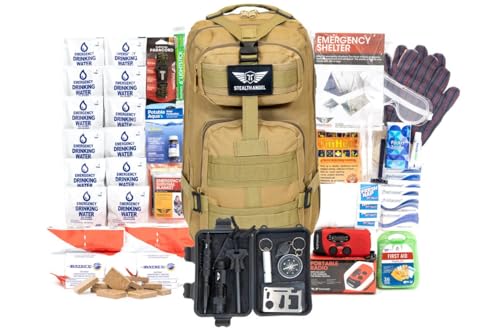
The Stealth Angel Tan kit targets essential readiness for a pair, offering a compact, high-quality backpack with items chosen by emergency-preparedness experts. This option is scalable to a tailored family size and aligns with guidelines from government and nonprofit agencies. It emphasizes secure packing and straightforward access to critical supplies, making it suitable for home, car, or office emergency plans.
Ready America 72 Hour Deluxe Emergency Kit, 2-Person

This 2-person, 3-day kit provides a balanced mix of food, water, a first-aid kit, and survival blankets. It includes items recommended by the Red Cross and FEMA, along with hygiene supplies, dust masks, ponchos, and water purification essentials. The food and water components carry long shelf lives, making it a practical option for vehicle preparedness or a defensive home kit.
EVERLIT 72 Hours 3 Day Earthquake Emergency Kit

The EVERLIT kit emphasizes a comprehensive 72-hour plan for a family of three, with a heavy-duty tactical backpack and a mix of water, food bars, water purification tablets, and medical supplies, including a CAT tourniquet for wound care. It is designed to meet FEMA guidelines for daily caloric needs and provides items intended to withstand diverse disaster scenarios such as earthquakes, floods, and severe storms.
TacPreps 72-Hour Survival Kit

TacPreps offers a premium 45L tactical backpack and a well-rounded sustenance and hydration setup. The kit includes portable cooking gear and long-lasting food options, plus an advanced hydration system with water filters and multiple pouches for organizing gear. It is designed for outdoor use and urban emergencies alike, enabling efficient transport and rapid access to essentials.
Stealth Angel 4 Person Black 72 Hour Emergency Kit

The four-person Stealth Angel kit is designed for families, with the same emphasis on expert-backed design and adherence to emergency guidelines. It supports preparedness for multiple household members and offers scalable options to accommodate larger groups while maintaining a compact backpack-friendly footprint for easy transport and storage.
Buying Guide
- Capacity and scalability: Determine how many people you need to support and whether you want a modular system that expands from 2 to 4–5 people as your family changes.
- Backpack quality and durability: Look for water-resistant materials, padded straps, multiple compartments, and easy access to critical items during stress.
- Food and water sustainability: Prefer kits with long shelf-life food and water provisions, or water purification options that suit your environment (home, car, boat, or remote areas).
- Medical supplies: Ensure the kit includes a first aid component, and consider additional trauma gear (like a tourniquet) if you are in rural or high-risk areas.
- Red Cross/FEMA alignment: Kits designed with guidance from recognized agencies can align with standard emergency recommendations and increase reliability during drills or real events.
- Portability vs. storage: Decide whether portability (compact, lighter packs) or more comprehensive coverage (larger backpacks with extra supplies) better serves your location and climate.
- Maintenance and shelf-life checks: Regularly rotate food and water, replace expired items, and inspect the backpack for wear to maintain readiness.
- Special considerations: If you live in areas prone to earthquakes, floods, or hurricanes, prioritize kits with water filtration, ponchos, and sturdy shelter provisions.
- Budget and value: Compare price-to-item-value across kits, noting that higher upfront cost may reflect better packing and durability that lasts longer under repeated use.