For outdoor enthusiasts who need reliable shelter in cold and transitional seasons, a 4 person tipi or hot tent combines space, ventilation, and stove compatibility. This guide highlights five top options that balance weight, durability, and interior room, making them suitable for family trips, group outings, or solo expeditions with gear. Each selection includes stove jack capability, weather resistance, and sturdy construction to help campers stay warm and dry in challenging conditions.
| Product | Capacity | Notes |
|---|---|---|
| Preself 4 Persons 5lb Lightweight Tipi Hot Tent (Olive Drab) | 4 | Ultra-light with stove jack, 7’3″ height |
| Preself 4 Persons 5lb Lightweight Tipi Hot Tent (Olive) | 4 | Fire retardant stove jack, wind resistance |
| Zoring Hot Tent with Stove Jack (4-5 Person) | 3-4 | Large base, snow skirt, 8.2 ft peak |
| Naturehike Ranch Fire Teepee Tent (4-6 Person) | 4-6 | 4 season with stove jack, windproof |
| ONETIGRIS OneTigris Smokey HUT Hot Tent | 4 | Ultralight, snow skirt, detachable floor |
Preself 4 Persons 5lb Lightweight Tipi Hot Tent Olive Drab
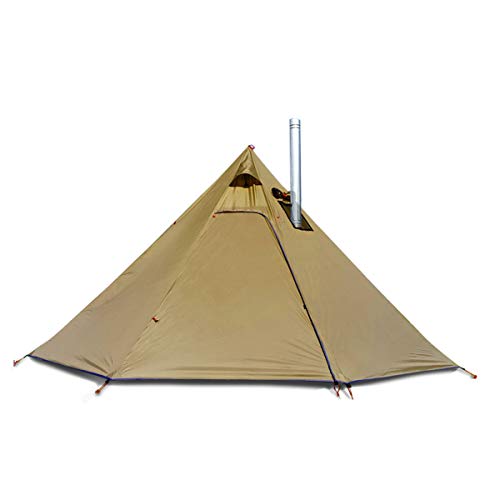
The 4 Person Tipi Hot Tent by Preself offers a floorless, 4 season design with a stove jack to accommodate a wood stove or other heat source. It features two large air vents and a double door setup to improve airflow and access. With a bottom diameter of 13 feet and a standing height of 7’3″, this tent aims to balance spacious interior room with a compact pack size, weighing approximately 5.6 pounds. The model T1 is described as ultralight and suitable for family or team camping in varied weather, including cold and windy conditions. Its roominess supports 2–3 adults or 1 person plus a stove for cook-and-converse sessions inside the shelter.
Key features include a dedicated stove jack designed for stove pipes, making it a practical choice for heat retention in cooler environments. The tent’s fabric is described as 210T-patterned polyester with air venting to maximize comfort. While the weight class is favorable for backpackers, the spacious interior helps with gear organization, cooking, and shelter from rain or snow. Campers should consider wind exposure in open terrain and ensure proper stove safety practices when using inside a tent of this type.
Preself 4 Persons 5lb Lightweight Tipi Hot Tent Olive

This 4-person model expands on the olive variant with similar core attributes: a stove jack, two large air vents, a double door configuration, and a standing height designed to accommodate multiple occupants and activities inside. The notes emphasize roominess for 2–4 adults or 2–3 adults with a stove. Additionally, the tent is marketed for wind resistance and includes a rugged anti-tear polyester construction with a PU coating for water resistance. The emphasis on wind and rain protection makes this option a practical choice for variable weather during hunting, hiking, or camping trips.
Capacity and comfort are balanced through a generous base and tall interior. The design supports cooking, conversation, and light work inside, provided proper stove safety and fuel management are observed. This model adds to a growing family of lightweight operational tents that appeal to campers who prioritize mobility without sacrificing interior space.
Preself 2 Persons Tipi Hot Tent With Inner Mesh

This model targets a smaller setup by including an inner mesh option with the same standing height (7’3″) and a 13-foot bottom diameter, accommodating 2 campers with space for gear or a stove. The mesh back-up creates separation from the outer fabric, improving ventilation and insect protection in milder conditions, while still offering a stove-ready interior. The tent uses 210T patterned polyester, with a water resistance emphasis (PU2000mm) and wind endurance, making it suitable for early-season and shoulder-season use where airflow and warmth management are essential. This option is attractive for hikers or hunters who want a lighter footprint without sacrificing interior comfort.
The design highlights practical layout choices—two doors and ample standing space—so dining or gear arrangements inside are feasible. In windy or rainy conditions, campers should monitor seam integrity and ensure stove placement adheres to safety guidelines, especially on ground with uneven terrain.
Naturehike Ranch Fire Teepee Tent

The Naturehike Ranch Fire Teepee Tent sits in the 4-season category with a stove jack integrated for camp stove use. The structure features a snow skirt to reduce wind chill and help retain heat, with a double-door arrangement for easy access and ventilation. The tent measures roughly 10.8 feet by 10.8 feet by 6.9 feet, providing a generous interior for 3–4 campers with space for cots and gear, plus an inner tent option for sleeping two or three people more comfortably. Mesh provisions and top ventilation windows contribute to airflow, which is critical for reducing humidity and condensation when a stove is in use.
Durability is emphasized through flame-retardant fabric and PU waterproofing rated for winter conditions. While the inner and outer tents may be purchased separately in some configurations, the design aligns with winter camping needs, including weatherproofing, wind resistance, and reliable shelter stability in cold climates. For groups targeting extended cold-season excursions, this option offers a balanced mix of warmth, ventilation, and ease of setup.
Zoring Hot Tent With Stove Jack (4-6 Person)
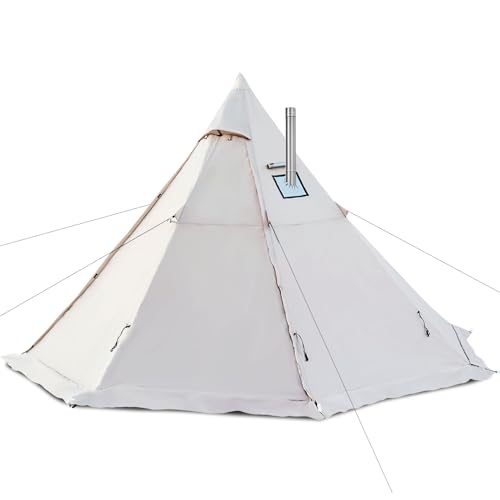
Zoring’s hot tent offers a large base with a peak height of 8.2 feet, designed to accommodate 3–4 campers in a propane- or wood-stove environment. The base size spans 13.12 by 13.12 feet, with a compact transport footprint of around 25.6 by 7.9 by 7.9 inches when packed. The tent uses premium 210T polyester fabric with a PU5000 coating, providing strong wind resistance and waterproof protection. Accessories included in the package cover a broad range of setup needs, including multiple poles, wind ropes, stakes, and a center pole. The outer fabric is tear-resistant, supporting rugged outdoor use in winter weather and rough terrain.
Safety and practical use considerations include stove chimney compatibility and ensuring adequate stove clearance from tent walls. The product listing notes the inner tent is not included, which can influence how campers plan for sleeping arrangements and insulation. Overall, this option emphasizes capacity, portability, and weatherproofing for cold-weather camping or hunting trips where warmth and shelter integrity are priorities.
ONETIGRIS Smokey HUT Hot Tent

The OneTigris Smokey HUT is designed as a four-season tipi-style tent with a stove jack and snow skirt for enhanced cold-weather performance. It emphasizes a durable 20D nylon construction with heat-taped seams for waterproofing, along with YKK zippers and a 2000mm water resistance rating. A notable feature is the detachable floor mat, which improves warmth retention and moisture control inside the shelter. The tent includes two doors for better airflow and versatile access in cold or humid conditions, and a flue pipe opening supports the use of internal heat sources for warmth and cooking.
Designed for bushcraft and extended outdoor adventures, this model balances lightweight portability with rugged materials. Prospective buyers should consider setup complexity and ensure compatibility with their stove of choice, along with proper stove safety practices and snow-load considerations in winter conditions.
Buying Guide: Key Purchase Considerations And Comparisons
- Stove jack compatibility: All selected tents advertise stove jacks, essential for heat retention in cold weather. Confirm jack dimensions, clearance, and whether bundled or add-on stove jackets are included.
- Season range: Four-season tents are more versatile for cold weather, wind, and snow. Look for snow skirts, windproof fabric, and reinforced seams to withstand winter conditions.
- Ventilation vs heat retention: Two doors and mesh inner tents help balance airflow with warmth. Ventilation windows prevent condensation but should not compromise warmth in freezing nights.
- Weight and packability: Ultralight models are easier to carry, but multi-person tents may require larger packs. Consider your balance between portability and interior space for gear and stove equipment.
- Floor design and inner options: Floorless vs. inner-tent-inclusive designs impact setup, insulation, and moisture management. In cold climates, a separate inner mesh can help with air circulation during milder evenings.
- Durability and materials: Look for 210T or similar polyester fabrics with PU coatings, tear resistance, and heat-taped seams. Durable poles and guy-lines improve stability in wind and snow.
- Setup and maintenance: Some tents come with detachable floors or modular components. Consider ease of setup, repairability, and storage when choosing a model for frequent use.
In choosing among these options, consider team size, typical camping conditions, and how important weight is for your itinerary. For winter or early spring trips, prioritize tents with snow skirts, stove compatibility, and robust waterproofing. For three-season use, models with good ventilation and straightforward setup provide reliable shelter without excessive weight. A balanced approach is to select a tent that offers adequate standing height, interior space for gear, and proven wind and water resistance while keeping maintenance simple for consistent use.