When choosing a 3 season sleeping pad, balancing insulation, weight, and packability matters. The products below are designed to perform across spring, summer, and fall conditions while staying affordable and rugged enough for backpacking or car camping. Use the buying guide to compare features and decide which pad best matches your sleep style and environment.
Summary of selected products:
| Product | Insulation (R-Value) | Weight | Type | Use Case |
|---|---|---|---|---|
| TREKOLOGY UL R7 All-Season | 7.2 | ≈2 lb | Inflatable | Backpacking, varied terrain |
| Gear Doctors Oxylus 4.3 R-Value | 4.3 | ≈1 lb | Self-Inflating Foam | Versatile, quick setup |
| TREKOLOGY UL R7 (Second Listing) | 7.2 | ≈2 lb | Inflatable | Backpacking, all season |
| FUN PAC Ultralight Pad with Pillow | Not stated; designed for warmth | Lightweight | Self-inflating | Hiking, travel, camping |
| VALEHOWL 1.8 lb Ultralight | 3.0 | ≈1.0 lb | Air Pad | Backpacking, 3-season |
TREKOLOGY Ultra-Light Sleeping Pad With R-Value 7.2

The TREKOLOGY Ul R7 sleeping pad is built for all-season comfort with a 7.2 R-value, delivering strong insulation against ground chill. SGS-certified materials guard against moisture and provide dependable warmth across varied climates. Its inflatable design prioritizes comfort, preventing bottoming out with a generous 4-inch thickness. The pad inflates to 70.8″ x 24″, offering ample space for most adults. Weighing about 2 pounds, it compresses to the size of a water bottle, supporting travelers who value light gear without sacrificing sleep quality.
Designed for portability, this pad suits backpackers who demand a compact footprint. The 70.8″ length accommodates most users, while the 24″ width provides room to shift positions overnight. Side sleepers benefit from the depth, which reduces pressure points along the hips and shoulders. The combination of insulation and support makes it a practical choice for three-season outings, from misty spring campsites to cool fall edges. Durability is enhanced by waterproof construction, helping it withstand damp ground and light moisture exposure.
Gear Doctors Oxylus 4.3R-Value Insulated Pad
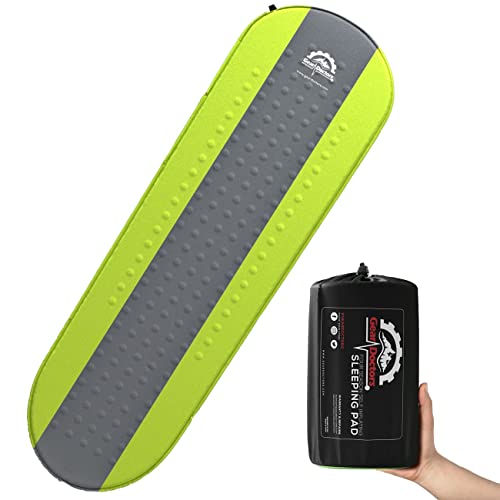
The Gear Doctors Oxylus sleeping pad combines foam insulation with a self-inflating design to deliver a balanced warmth-to-weight ratio. Weighing around 1 pound and packing compactly, it provides a 72″ length and roughly 20″ width with a 1.5″ (3.8 cm) thick profile when inflated. The product emphasizes quick setup—unroll, let the foam self-inflate, and add a few breaths to reach the desired firmness. The 4.3 R-value core helps maintain warmth in cooler environments, and the durable 75D shell resists wear while the back-to-back inflation system supports both beginners and seasoned hikers.
The oxylus design prioritizes simplicity and reliability on multi-day trips. Its portable form is ideal for those who want a flexible sleeping arrangement that can adapt from car camping to light treks. The pad’s materials are chosen for durability and resistance to moisture, ensuring longevity under regular outdoor use. For campers who value a straightforward, low-maintenance option, Oxylus offers a practical balance of warmth, weight, and ease of use.
TREKOLOGY UL R7 – Second Listing

This listing reiterates the all-season benefits of the TREKOLOGY R7 sleeping pad, maintaining a 7.2 R-value for reliable warmth on diverse terrains. The pad remains ultra-light for its insulation capacity, continuing to offer a packing size comparable to a water bottle. Its dimensions ensure comfortable sleeping space for most adults, with a thickness engineered to reduce disruptive pressure points for various sleeping positions. The emphasis here remains on portability and year-round comfort, making it a staple choice for hikers seeking dependable warmth without added bulk.
The second TREKOLOGY option reinforces the brand’s emphasis on performance versus weight. While still inflatable, it remains accessible to users who need a compact setup with robust insulation. For people who frequently switch between camping environments—mountainous cool nights to late-summer warmth—this pad provides a familiar sleep surface across excursions, without major gear upgrades between trips.
FUN PAC Camping Pad With Built-in Pillow

The FUN PAC sleeping pad emphasizes convenience with a built-in pillow and a self-inflating design. At up to 78 by 27 by 8 inches when inflated, it offers generous surface area and comfort, keeping sleepers away from uneven ground and sharp rocks. The built-in pump inflates quickly within 30 to 60 seconds, reducing setup time and effort. The compact, lightweight form makes it suitable for backpacking and travel, while the dual-layer valve helps prevent air leaks and rapid deflation, supporting a hassle-free packing experience.
Users benefit from the padded head support and the 3-inch thickness that minimizes pressure points during sleep. The pad’s size allows some movement while still packing down to a portable form. While not explicitly stating an R-value, its focus on warmth and even air distribution makes it a practical option for 3-season camping when paired with appropriate sleep climate planning. The included pillow enhances neck alignment for side sleepers and back sleepers alike.
Wevelel Memory Foam Sleeping Pad

The Wevelel memory foam sleeping pad uses high-density memory foam for enhanced support and weight distribution. With a 3.1-inch thick profile, it elevates sleepers well above ground pressure and provides a luxurious feel similar to a high-end hotel mattress. The pad measures about 77″ by 26.98″ and can support substantial weight, with a tested static load of 800 pounds. Self-inflation is quick, with a multi-valve system that reduces effort, and the foam composition offers consistent comfort across a range of body types and sleeping positions. The durable, skin-friendly outer layer contributes to a comfortable sleeping surface over time.
Wevelel targets users who prioritize comfort and stability, especially in car camping or longer trips where rest quality drives performance. The memory foam approach helps maintain shape and comfort on uneven ground, and the pad’s dimensions accommodate taller sleepers. While heavier than typical air pads, it offers long-term durability and a notable sleep experience for those who value thickness and pressure relief.
Buying Guide: Key Purchase Considerations For 3 Season Sleeping Pads
- Insulation and climate suitability: For three-season use, look for pads with R-values typically around 2.0 to 4.0+. Higher R-values provide better ground insulation in cooler conditions, while lower values may suffice in warm weather or when used with a sleeping bag rated for lower temperatures.
- Weight and packability: Backpackers should weigh the trade-off between insulation and weight. Inflatable pads are often lighter per R-value, while self-inflating foam pads provide quick setup and insulation, sometimes at the expense of extra weight.
- Sleep comfort and support: Thickness and surface design influence pressure relief. Side sleepers benefit from greater thickness; rigid or memory foam cores offer generous contouring, but may be heavier.
- Durability and materials: Look for waterproof or water-resistant shells, tear-resistant fabrics, and robust valves. Closed-cell foam options are resilient and puncture-resistant but heavier; inflatable pads rely on airtight seams and puncture resistance.
- Setup and maintenance: Self-inflating pads provide simplicity, while inflatable pads with pumps require minimal effort for inflation. Consider the ease of packing and whether repairs or replacements are readily available.
- Maintenance and longevity: Durable outer fabrics, UV resistance, and resilience to abrasion extend pad life. A lifetime replacement guarantee, when offered, adds long-term value for frequent campers.
- Temperature layering strategy: Combine pads with a suitable sleeping bag or quilt for optimal warmth. In cold seasons, layering a pad with a reflective emergency blanket or groundsheet can further reduce heat loss.
- Budget and brand support: Reputable brands with clear warranty policies and customer support can improve long-term satisfaction and replacement reliability.
When selecting a 3 season sleeping pad, matching the pad’s insulation with your typical camping temperatures, picking a weight you can carry on long treks, and ensuring a comfortable sleeping surface for your sleeping style are essential. The pads listed above provide a range of insulation levels, materials, and setup options to fit hikers, campers, and travelers who prioritize reliable rest across spring through autumn.