Planning a family camping trip requires a reliable, spacious shelter, especially when you need room for gear, air mattresses, and a built‑in screen area to enjoy the outdoors bug‑free. This guide highlights five top 12‑person cabin tents with convertible or built‑in screen rooms, focusing on models that balance size, setup ease, and weather protection. The selections below draw from well‑reviewed options that offer durable construction, ample sleeping space, and flexible living areas for multi‑room comfort.
| Product | Brand | Capacity / Rooms | standout Feature |
|---|---|---|---|
| CORE 11 Person Cabin Tent with Screen Room | CORE | 11 people, multi‑room w/ screen room | Screen room for bug‑free lounging |
| CORE 12 Person Tent | CORE | 12 people, multi‑room | Generous interior with straight walls |
| CORE 12 Person Instant Cabin Tent | CORE | 12 people, 3 rooms | 2‑minute instant setup |
| CORE 12 Person Instant Cabin Tent with LED Lights | CORE | 12 people, 3 rooms | Built‑in ceiling LEDs for lighting |
| Coleman Skylodge 12‑Person Tent | Coleman | 12 people, screen room porch | Color‑coded poles and screened porch |
CORE 11 Person Cabin Tent With Screen Room
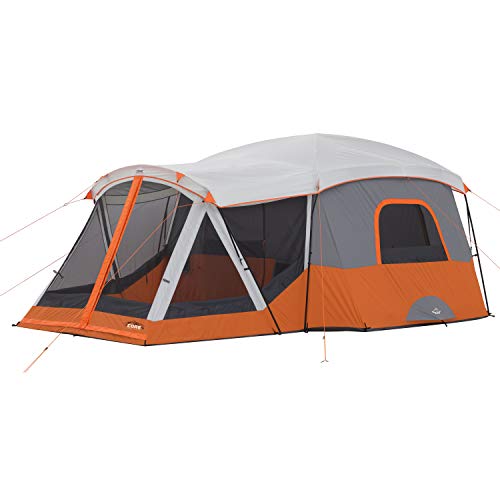
This CORE model emphasizes a nearly straight-wall interior for maximum standing room and easy movement. Sleeping capacity is listed as 17 by 12 feet with an 86‑inch center height, allowing space for three queen beds or multiple sleeping areas. The tent uses H20 Block Technology with 1200mm fabric, a fully taped rainfly, sealed seams, and fully zipped windows. Stake‑and‑guylines included bolster stability, making it suitable for variable weather. The screen room adds a dedicated lounging or dining zone that helps separate living and sleeping spaces, a desirable feature for family trips.
Key considerations: The large interior is excellent for families but may require a generous packing footprint. Setup is straightforward with multiple entrance points, and the weather protection stackup includes taped seams and a sealed rainfly. Consider how the screen room will be used—as a drying area, bug‑free seating, or a dining nook—and plan for gear storage accordingly.
CORE 12 Person Tent
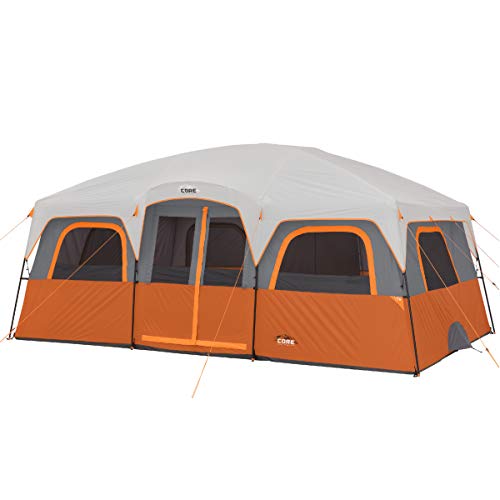
This large multi‑room family cabin tent emphasizes spacious interior living with a nearly straight wall design. Sleeping capacity is described as 16 by 11 feet with an 86‑inch center height, accommodating three queen beds with gear or up to 12 people without gear. Like other CORE tents, it features H20 Block Technology with a 1200mm fabric rating, a fully taped rainfly, sealed seams, and fully zipped windows. Included guylines and steel stakes enhance stability in windy conditions. The tent’s generous footprint supports organized gear zones and multiple sleeping arrangements.
Considerations: The footprint is substantial, so assess campsite space and vehicle access. While setup can be straightforward, the size requires planning for transport and storage. The screen windows help with airflow, but ensure ventilation is balanced with weather protection for varying conditions.
CORE 12 Person Instant Cabin Tent
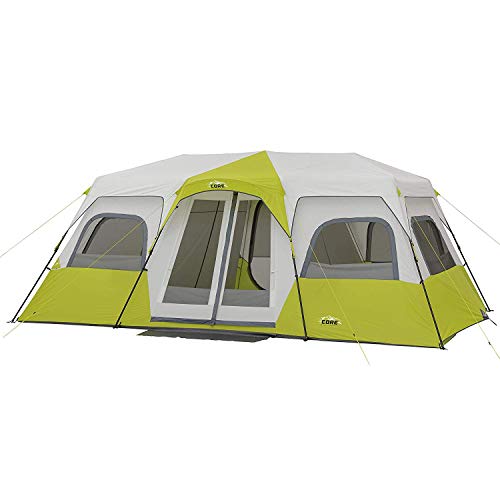
This tent uses instant pop‑up technology with pre‑attached poles that lock into place, enabling setup in about two minutes. The sleeping footprint is 18 by 10 feet with an 80‑inch center height, and it can fit three queen beds with gear or up to 12 people without gear. It includes 1200mm fabric, a fully taped rainfly, sealed seams, and fully zipped windows, along with guylines and steel stakes for stability. The instant setup is ideal for campers who want to minimize setup time and maximize time at the site.
Considerations: Quick setup saves time but may require more careful packing and transportation due to the larger size. The interior layout supports multiple zones, and the screen windows improve airflow. Ensure you have a suitable campsite that accommodates the tent’s footprint and height.
CORE 12 Person Instant Cabin Tent with LED Lights

This model adds ceiling pole‑integrated LED lighting with high, low, and night light levels controlled by a wall switch, providing practical illumination for evenings inside the tent. It retains the instant pop‑up setup, ensuring a quick and reliable assembly. Sleeping space remains generous: 18 by 10 feet with an 80‑inch center height, accommodating three queen beds with gear or up to 12 people without gear. The lighting feature is especially helpful for late arrivals or nighttime activities without relying on external lighting.
Considerations: Lighting enhances convenience but check battery or power needs and ensure the lighting setup does not negatively impact battery life during longer trips. The LED zones should be used in combination with proper ventilation to maintain comfort, especially in warm conditions.
Coleman Skylodge 12‑Person Tent

Coleman’s Skylodge model features a 5 by 10 ft. weatherproof main area with a multifunctional screened porch—an expansive living and lounging space compatible with cooking and gear storage. The WeatherTec system uses welded corners, inverted seams, and taped seams on the rainfly and tent body to resist water intrusion, while a strong frame is tested to withstand winds up to 35 mph. The color‑coded poles and sleeves help with intuitive setup and quick orientation, supporting a family camping experience with easier assembly and reliable protection against rain and breezes.
Considerations: The screened porch adds an excellent living extension, yet the overall footprint is large. Weather protection is strong, but consider campsite wind exposure and the weight of the tent when planning transportation. The porch area can become a focal point for gatherings, meals, and gear management during trips.
8–12 Person Camping Tent With Zippered Divider

This Castle Unicorn model targets large groups with a roomy 15.1′ x 10′ footprint and 7′ peak height. It supports 8–12 people and includes a two‑room setup with a central divider, two rooms with mesh doors, a front porch, and a durable 150D Oxford fabric with a PU1500mm waterproof coating. The armored structure with reinforced fiberglass poles emphasizes wind resistance and long‑lasting use, while the floor coating protects against ground moisture and wear. Three mesh doors and windows promote ventilation while maintaining weather protection.
Considerations: The two‑room configuration offers privacy and flexibility for families or groups. Balance the weight and bulk with transport options, especially if you plan on car camping or traveling to remote sites. The porch area provides added storage and social space but may require extra setup space.
KTT Extra Large Tent 12 Person (A)

This KTT model emphasizes a hands‑on assembly approach for campers who prefer manual setup over automatic pop‑ups. It features a large interior space: 14.1 feet by 10 feet with a 6.58‑foot height, suitable for four full air mattresses or 8–12 people. The tent is divided into two rooms with three doors and three mesh windows, offering a flexible layout and breathability. Materials include Oxford polyester, mesh, and PE‑coated polyester. The package includes multiple pole joints and repair patches to support long‑term use.
Considerations: The pitched design requires careful setup and staking, particularly in windy weather. The two‑room layout supports privacy and organization, but transport and storage should account for its size. This model aims for a balance between space, durability, and budget considerations for family trips.
Buying Guide: Key Purchase Considerations And Comparisons
When choosing a 12‑person cabin tent with a convertible screen room, consider how you plan to use the screen area: as a dining zone, lounging area, or bug‑free sleeping extension. Look at interior height, wall design, and the effectiveness of weather protection features such as taped seams, fully sealed windows, and a quality rainfly. A nearly straight‑wall interior increases usable space for air beds and gear but may require more campsite frontage.
Important factors to compare across models:
- Capacity and layout: Ensure the sleeping area matches your group size and that there is a distinct living or screen room for social activities.
- Setup time and method: Instant pop‑up tents save time but may demand more storage space; traditional sets require more effort but can be lighter and more compact to transport.
- Weather protection: Look for 1200mm or higher fabric ratings, taped seams, and a well‑designed rainfly for rain and wind resistance.
- Ventilation: Screen windows and doors help airflow; consider multiple access points to improve cross‑ventilation on warm nights.
- Durability and materials: High‑quality fabrics (polyester or similar), robust poles, and reinforced floors improve longevity in rugged environments.
- Weight and transport: Larger tents require adequate vehicle space; plan how you will pack and move the tent from car to site.
- Accessories and warranty: Guylines, stakes, storage pockets, LED lighting, and pockets can improve usability; verify warranty terms for long‑term confidence.
Bottom line: For families prioritizing a convertible screen room, prioritize models with a dedicated screen area, strong weather protection, and a layout that maximizes living space without sacrificing stability. Compare setup time, interior height, and footprint to match your campsite capabilities and travel plans.