For backpackers and campers, a dependable foam sleeping pad can turn a hard, cold ground into a surprisingly comfortable night’s sleep. This guide highlights five top foam-based options that balance rugged durability, insulation, and packability. Each product is well-suited for hiking, trekking, and overnight trips, helping you stay warm and rested without adding excessive weight.
The following quick reference table lists the chosen products, their brands, and core strengths to help you compare at a glance.
| Product | Brand | Key Strength |
|---|---|---|
| The Therm-a-Rest Z Lite Original | Therm-a-Rest | Inexpensive, durable closed-cell foam with accordion-fold design |
| The Therm-a-Rest Z Lite Sol | Therm-a-Rest | Enhanced warmth with ThermaCapture coating |
| Sea to Summit Camp Self-Inflating Foam Mat | Sea to Summit | 4-season insulation with self-inflating efficiency |
| FOCHIER F Ultralight Foam Sleeping Pad | FOCHIER F | Peanut shape, space-saving accordion design |
| Gear Doctors Self-Inflating Camping Pad | Gear Doctors | 4.3 R-value insulation with compact packed size |
Therm-a-Rest Z Lite Original Camping Pad

The Z Lite Original is a lightweight, compact closed-cell foam sleeping pad. Its accordion-style folding design makes it highly packable for hikers and climbers. Heat is trapped within the padded dimples, providing extra warmth in cold conditions. This model carries an R-value of 1.7, offering dependable insulation for many shoulder-season and mild winter trips. Durability and simplicity are its hallmarks, making it a staple for traditionalists who value reliability over features.
Therm-a-Rest Z Lite Sol Sleeping Pad

The Z Lite Sol builds on the classic Z Lite with a ThermaCapture reflective coating that reflects radiant heat back toward the sleeper, increasing warmth by about 20 percent. The closed-cell foam remains lightweight and compact, while the reflective material improves cold-weather performance. With an R-value of 2.0, this pad is well-suited for shoulder-season nights or cooler desert environments, delivering reliable warmth without sacrificing packability.
FOAMING FOCHIER F Ultra-Light Pad (Blue)

This FOCHIER F pad emphasizes a peanut-shape and accordion-style design to save space when packed. It uses IXPE closed-cell foam and includes an insulating layer with reflective aluminum film to capture and circulate body heat, achieving an insulation rating around 2.1. Weighing light and folding compactly, it suits ultralight backpackers who still want solid support and warmth without bulk.
Sea to Summit Camp Self-Inflating Foam Mat

This 4-season sleeping mat blends foam support with self-inflating capability. A tapered, 1.5-inch-thick foam structure provides reliable support, while the multi-function valve allows fast inflation, one-way deflation, and fine-tuning of air pressure. Its design emphasizes warmth and comfort with an insulation level that handles cooler ground and variable conditions, making it a versatile choice for diverse backcountry environments.
Gear Doctors Self-Inflating Sleeping Pad
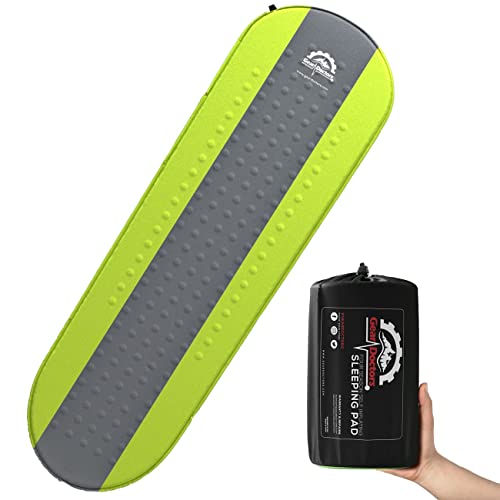
The Gear Doctors pad uses a thermo-insulation foam with a 4.3 R-value, designed to deliver warmth without requiring bulky air-inflated gear. It packs down to a compact 8 x 12 inches and inflates to a comfortable 72 x 20 x 1.5 inches. The setup is intended to be easy: open the valve, allow the foam to expand, and seal for a supportive night on the ground. It’s a practical option for those who want reliable insulation with straightforward use.
Buying Guide — Key Purchase Considerations
When selecting a foam sleeping pad for backpacking, consider insulation, weight, packability, and durability. Closed-cell foam pads are excellent for rugged use, resisting punctures and moisture while staying relatively lightweight. For cold weather, pay attention to the R-value; higher values indicate better insulation. If space and weight are critical, accordion-fold or peanut-shaped designs can reduce packed size, but verify comfort against your sleeping style and bed frame. Self-inflating options offer convenience and quicker setup, but they may be slightly heavier or bulkier. Durability matters for bushcraft trips, so assess the foam’s density and edge protection for abrasion resistance. Finally, compatibility with your sleep system (tents, bivy sacks, and sleeping bags) ensures a cohesive warm-and-comfortable night outdoors.
Consider these scenarios to guide your choice:
– Weekend trips in mild conditions: a budget-friendly Z Lite Original may suffice, balancing warmth and compactness.
– Shoulder-season or high-altitude trips: the Z Lite Sol provides extra warmth benefits to combat chillier nights.
– Family or group trips where quick setup matters: a self-inflating mat like Sea to Summit or Gear Doctors offers ease of use and reliable insulation.
– Ultralight backpacking: a FOCHIER F model with peanut shape and tight packed form can save precious ounces and space while preserving comfort.
– Versatile use in mixed climates: a pad with higher R-value, robust insulation, and durable foam handles a range of environments effectively.