For serious winter camping and high-altitude adventures, a reliable 0-degree down sleeping bag is essential. This article highlights top 0-degree down options and what to consider when choosing one. Each product section summarizes key features, warmth, and packing convenience to help you compare at a glance.
| Product | Brand | Fill Power | Approx Weight | Key Feature |
|---|---|---|---|---|
| Sea to Summit Spark Ultralight Down Sleeping Bag, 0-Degree, Regular | Sea to Summit | 850+ fill power | Lightweight | High-loft down with moisture resistance |
| Coleman North Rim 0°F Big & Tall Sleeping Bag | Coleman | Down not specified on label | Big & tall sizing | Thermolock draft tube for warmth retention |
| Kelty Cosmic 0 Ultra 4 Season | Kelty | 800 fill power Dridown | Versatile | Trapezoidal baffles for heat retention |
| QEZER 0 Degree Down Sleeping Bag with 660 FP | QEZER | 660 Fill Power | Midweight | Two-way zippers; compact storage |
| QEZER 0 Degree Down Sleeping Bag with 600 FP | QEZER | 600 Fill Power | Lightweight | Compact and portable; semi-rectangular shape |
Sea to Summit Spark Ultralight Down Sleeping Bag, 0-Degree

The Sea to Summit Spark Ultralight Down Sleeping Bag is designed for lightweight 0-degree camping. It uses high-loft 850+ fill power down with a responsible down standard certification and a non-PFC Ultra-Dry treatment to improve moisture resistance. The ultralight 10D shell and breathable liner support all-night comfort while maintaining warmth in cold conditions. The hood and footbox stay highly water resistant, aiding performance in damp environments. This bag aims at backpackers who prioritize weight and packability without sacrificing warmth.
Coleman North Rim 0°F Big & Tall Sleeping Bag

Coleman’s North Rim 0°F Big & Tall sleeping bag provides warmth suitable for frigid nights with a roomier cut for taller campers. Features include a Thermolock draft tube to reduce heat loss through the zipper and a design that accommodates sleepers up to 6 ft 2 in. While the specific fill power isn’t listed, Coleman emphasizes heat retention and comfort in cold conditions. The bag is a practical choice for taller hikers who want a reliable 0-degree option with easy entry and exit and straightforward maintenance.
Kelty Cosmic 0 Ultra 4 Season

The Kelty Cosmic Ultra 0 Degree Down Sleeping Bag uses 800 fill power Dridown insulation and trapezoidal baffles to enhance heat retention. It’s designed for four-season use and becomes a versatile option for winter camping. Kelty’s sustainable approach is reflected in recycled materials for liners and shells. The bag aims to balance warmth with compressibility, offering a weight-conscious solution without sacrificing comfort in extreme conditions. Fans of traditional mummy shapes and modern insulation will find this bag a robust all-season performer.
QEZER 0 Degree Down Sleeping Bag with 660 FP
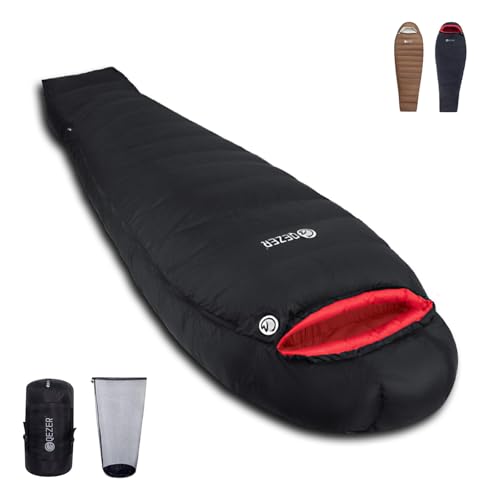
This QEZER bag uses 660-fill power premium duck down to deliver warmth at 0 degrees. It features a two-layer or double zipper design to prevent cold air intrusion and a chest insulation upgrade for improved warmth. The bag is relatively roomy for a 0-degree model, with a semi-rectangular shape and foot vent. Weighing a mid-range amount, it balances portability with warmth for backpacking and winter camping. The inner and outer 400T20D nylon fabrics help resist moisture and maintain durability in rugged conditions.
QEZER Down Sleeping Bag for Adults 0 Degree, 620 FP

QEZER’s 0-degree bag with 620 fill power offers a compact and lightweight option for cold-weather camping. It uses natural duck down with a 2.2 lb fill and a snug mummy design that helps trap heat. The bag is designed to compress well for backpacking but remains roomy enough for comfortable sleeping in cold nights. It includes a chest insulation boost and double zippers to help control airflow. As with many ultralight options, ventilation is important after opening the bag to restore loft.
Buying Guide: Key Considerations for 0-Degree Down Sleeping Bags
- Temperature ratings and comfort: A 0-degree bag should keep most users warm at 0°F, but comfort temperatures vary by individual and sleeping gear. Check the stated comfort and limit temperatures, and consider a bag with a temperature range that aligns with your planned conditions.
- Fill power and down quality: Higher fill power (e.g., 800 fp) typically offers greater warmth per ounce and better compressibility. Lower fill power (around 600–660 fp) can still perform well but may be heavier or bulkier to achieve the same warmth level.
- Shell and liner materials: Durable, waterproof-repellent shells help resist moisture and down feather migration. Nylon fabrics with adequate denier and a tight weave improve durability and loft retention over time.
- Shape and space: Mummy bags trap heat effectively, while semi-rectangular or rectangular shapes offer extra shoulder and hip room. For taller or broader hikers, consider Big & Tall or wider-cut designs and practical footboxes.
- Weight and packability: Ultralight bags maximize portability, but may compromise on durability or warmth retention in some scenarios. Balance weight with expected use, padding, and your pack capacity.
- Moisture management: DWR-treated shells and moisture-resistant down coatings help in damp environments. Down treated to resist moisture maintains loft better in humidity or light condensation.
- Ventilation and zippers: Double zippers allow airflow for milder nights or active use, which helps prevent overheating. Check zipper construction for snag-free operation in cold conditions.
- Repairability and warranty: Look for bags with reliable stitching, robust zippers, and clear warranty terms. Brands offering repair services can extend the life of your bag on rugged trips.
- Storage and maintenance: Proper ventilation after unpacking is essential to re-loft the down. Use the storage bag or a large breathable sack for long-term storage.
- Two-bag compatibility: Some models can zip together to form a double bag, which is ideal for couples or shared sleeping arrangements in winter expeditions.
In selecting a 0-degree down sleeping bag, assess your planned camping environment, expected humidity, and typical night-time temperatures. A higher fill power bag may be worth the trade-off if you prioritize weight savings and compact packing, whereas a bag with more insulative features and a more spacious cut may suit campers who value comfort and room to move. Always verify return policies and ensure your purchase aligns with your gear system, including tents, pads, and outerwear.