Explore top cabin-ready solar system kits that fit off-grid cabins, sheds, and remote retreats. This guide highlights five ECO-WORTHY and Renogy options that combine solar panels, inverters, and storage for reliable 110V/120V power. Each kit is designed for straightforward installation, scalable output, and smart monitoring to support everyday appliances in a cabin setting.
| Product | System Type | Approx. Daily Output (under ideal sun) | Key Benefit |
|---|---|---|---|
| ECO-WORTHY 48V Off Grid Complete Kit (1200W) | Off-grid, 48V | About 4.68 kWh | High flexibility with 6x195W panels and 3500W inverter |
| ECO-WORTHY 7.168KWH RV Kit | Off-grid, 48V | Up to 7.168 kWh | Includes 4x200W panels and 3000W UPS inverter charger |
| ECO-WORTHY 9.36KWH System | Off-grid, 48V | About 9.36 kWh | Large-capacity with 5000W inverter and 12 panels |
| ECO-WORTHY 4.68KWH Pro Kit | Off-grid, 48V | About 4.68 kWh | Two 50Ah Li-ion batteries for solid storage |
| Renogy 400W Premium Kit | Off-grid, 12V | 2–2.5 kWh (est.) | Renogy reliability with MPPT and complete mounting accessories |
Note: The daily output depends on sun exposure, location, and system configuration. The kits listed here are chosen for cabin-ready use, straightforward setup, and balanced components for reliable off-grid power.
ECO-WORTHY 48V Off Grid Complete Kit

This complete 48V off-grid system pairs six 195W N-Type bifacial panels with a 3500W inverter and an 80A MPPT controller. The bifacial cells improve energy capture, and the 4.68 kWh-per-day potential suits base cabin loads such as climate control and essential appliances. The system supports parallel connections for higher capacity, enabling scalable energy in expansion-ready cabins. WiFi monitoring allows remote oversight of performance, battery state, and inverter status.
ECO-WORTHY 7.168KWH RV Kit

This 800W solar panel kit is designed for RV-style off-grid living but scales nicely for cabins. It includes four 200W bifacial panels and a 3000W UPS inverter charger with Bluetooth. The kit enables smooth transition between solar and mains power, ensuring continuous operation for essential cabin devices. Four-step installation aims to reduce DIY complexity while providing long-term reliability for off-grid trips and extended cabin stays.
ECO-WORTHY 9.36KWH System
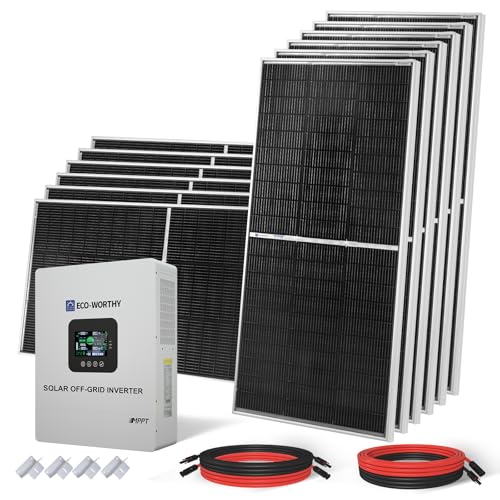
This 2340W panel array powers a 5000W 48V all-in-one inverter with a robust MPPT controller, designed to sustain cabin life through varied weather. The 195W N-Type cells deliver high efficiency, while the system’s 12 panels offer substantial daytime generation. The setup is suitable for cabins with higher energy demands or occasional extended use of climate control and appliances, packaged with durable hardware and weather-ready components for long-term operation.
ECO-WORTHY 4.68KWH Pro Kit

This kit mirrors the 4.68 kWh daily output and expands with a pair of 48V Li-Batteries and a 3500W solar charger inverter. The dual-battery configuration boosts stored energy for overnight power or cloudy days, making it a strong option for cabins with higher baseline loads. The N-Type panels and higher surge capacity support stable operation of devices such as refrigerators, televisions, and HVAC units during diverse weather conditions.
Renogy 400W Premium Kit

The Renogy Premium Kit includes 400W of solar panels, a 40A MPPT controller, and mounting hardware, all designed for 12V systems. It emphasizes efficient power management, robust warranty coverage, and ease of setup for cabin use. The kit’s modular nature lets cabin owners expand capacity over time, aligning with evolving energy needs and climate control requirements in remote settings.
Buying Guide
Key considerations for choosing a cabin solar system kit include system voltage, storage capacity, and expandability. For cabins, 24V–48V configurations minimize current and reduce wire losses over longer runs. Storage options should match daily needs and climate; lithium batteries offer longer life and deeper cycles but come at a higher upfront cost. Inverter size matters: plan for peak loads such as air conditioning, heaters, or microwaves. MPPT controllers improve efficiency in variable sun, while WiFi or Bluetooth monitoring provides visibility into performance and battery health. Mounting options, weather resistance, and dealer support also influence long-term reliability. Compare kits for expansion potential (additional panels or extra batteries) to match future cabin upgrades, seasonal usage, and off-grid contingency planning.
For cabin installations, it helps to map daily power usage, identify essential appliances, and estimate solar hours based on location. A kit with a robust inverter, reliable battery chemistry, and scalable panel capacity provides the most adaptable foundation for remote living, while ensuring energy independence during extended trips or off-grid seasons.