For hikers and campers who crave warmth without the bulk, ultralight 30-degree sleeping bags offer a practical balance of weight, compressibility, and comfort. This guide highlights five top options, highlighting how each model uses down or synthetic insulation, fabric weight, and design features to keep you warm at cool-to-cold nights. Read on to compare shell weight, fill, and packability to help you choose the right companion for your next overnight trek.
Summary of chosen products
- Sea to Summit Spark Ultralight Down Sleeping Bag, 30-Degree, Regular — Sea to Summit
- Sea to Summit Spark Ultralight Down Sleeping Bag, 30-Degree, Long — Sea to Summit
- BUERTS Down Sleeping Bag for Adults Cold Weather Ultralight & Compact — BUERTS
- iClimb 3M Thinsulate Insulation Mummy Sleeping Bag (41F Comfort) — iClimb
- Naturehike Ultralight Backpacking Down Sleeping Bag (3 Seasons) — Naturehike
Sea to Summit Spark Ultralight 30-Degree — Regular

The Spark Ultralight is built for minimalist overnights where every ounce counts. This sleeping bag uses a high-loft down insulation with an ultralight shell designed to resist moisture while maintaining loft. Its 30-degree rating targets cool nights in shoulder-season treks, bike touring, and alpine climbs, delivering warmth without excess bulk. The regular cut suits average height sleepers, and the bag’s design emphasizes compressibility for easy packing in lightweight backpacks.
Sea to Summit Spark Ultralight 30-Degree — Long

The Long version provides extra length for taller sleepers while maintaining the same ultralight emphasis. With the same 30-degree rating, this model expands sleeping space without adding significant weight. The down insulation remains responsible for loft and warmth, while a water-repellent, PFC-free treatment helps the hood and footbox stay drier during moisture exposure. It’s a strong option for taller hikers or those who prefer more shoulder room while still prioritizing packability.
BUERTS Down Sleeping Bag — Ultralight & Compact

BUERTS places warmth and portability at the forefront with a down-filled design rated for cold weather. The bag highlights include an RDS-certified down fill, a compact pack size, and a warm-to-weight ratio suited for cold night camps. The interior lining uses advanced threading to enhance heat retention, while the shell balances durability and breathability. While the stated lower limit is cold-weather friendly, the ultralight construction makes it a practical choice for late-season climbs and high-altitude treks where weight savings matter most.
iClimb Thinsulate Insulated Mummy Bag — 41°F Comfort
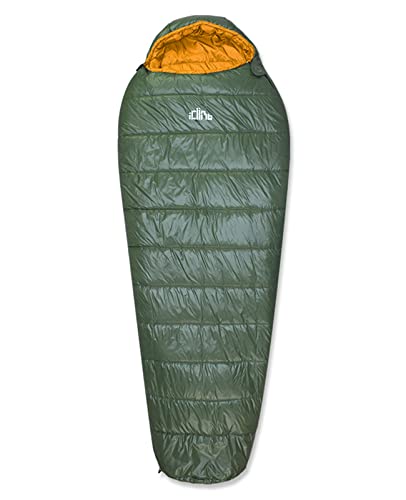
The iClimb bag uses 3M Thinsulate insulation to deliver warmth at a light weight. While not explicitly listed for a 30-degree rating, the design emphasizes warmth retention, a compact form, and a stay-dry interior thanks to the synthetic fill. The 20D nylon outer minimizes weight while maintaining durability, and features such as a draft collar and a contoured footbox work to reduce heat loss on cool spring and fall nights. This option is suitable for three-season use where temperatures stay near freezing on occasion but where pack weight remains a priority.
Naturehike Ultralight Down Sleeping Bag — 3 Seasons

Naturehike offers a compact, down-filled option with a strong weight-to-warmth balance aimed at four-season versatility in a 3-season range. The bag uses duck down with a relatively high fill power for warmth-to-weight efficiency and categorizes comfort and extreme temperatures across a broad range. Suitable for backpackers who value a light carry and a straightforward, reliable design, this model emphasizes a cloud-like warmth feel without slowing down pace on long treks.
Buying Guide: Key Purchase Considerations
- Insulation type and fill: Down insulation delivers outstanding warmth-to-weight, but synthetic fills retain heat when damp and are typically easier to care for. For 30-degree targets, down with a responsible down standard (RDS) is common, while synthetic layers offer reliability in wet conditions.
- Temperature rating and comfort: Look for a bag with a rated comfort temperature that aligns with your expected conditions. Do not rely solely on a “limit” rating; consider your metabolism, shell layer, and humidity.
- Weight and compressibility: Ultratech designs emphasize lighter fabrics (e.g., 10D to 20D shells) and efficient loft. Compare total weight and packed size to ensure it fits your pack and trekking pace.
- Shell fabric and durability: Lightweight shells should still resist snagging and abrasion. DWR-treated shells help shed moisture and maintain loft in damp environments.
- Fit and cut: Regular and long lengths address different torso heights. A mummy shape reduces dead air and enhances heat retention, while some models offer roomier mummy designs for added movement.
- Care and maintenance: Down bags require careful drying and loft restoration. Synthetic options are generally easier to wash and maintain across frequent uses.
- Packability and included accessories: Check whether a compression sack or packing cube is included, as this affects overall space and convenience in the backpack.
- Warranty and brand support: Look for reputable brands with clear return policies and warranties, especially for high-use outdoor gear.
Why choose ultralight options for 30-degree nights?
Ultralight sleeping bags optimize warmth-to-weight, enabling faster climbs and longer days without burdening the backpack. A 30-degree design pairs well with transitional seasons or warmer winter nights, particularly when layered with a breathable insulating jacket or a liner. Materials and construction focus on loft retention, moisture management, and compact packing, all of which contribute to comfort on chilly excursions while maintaining essential stamina for backcountry travel.
Readers should consider their local climate, typical elevation, and expected precipitation when selecting among these options. The Sea to Summit Spark models emphasize compactness and moisture resistance, while BUERTS provides down warmth with a focus on portability and rugged construction. iClimb and Naturehike broaden the range with synthetic and down blends to cover wet or mixed conditions without excessive weight.
In sum, the right ultralight 30-degree sleeping bag enhances safety, comfort, and efficiency on outdoor adventures. By weighing insulation type, temperature targets, and packability against your planned routes, you can choose a bag that keeps you warm without slowing your pace.